 Coffee Gear Picks
Grind Size for Pressurized Portafilter (2026 Guide)
For grind size for a pressurized portafilter, start medium-fine: between drip coffee and a conventional espresso grind. A pressurized, or dual-wall, basket supplies part of the resistance for you, so you do not need a magic click number. Watch the flow, taste the cup, and adjust in tiny moves.
Dial In a Pressurized Basket
Start medium-fine, watch the cup, then make one small change
Step 1 Set a baseline
- Start at medium-fine
- Fill the basket evenly
Step 2 Pull and observe
- Brew as normal
- Watch the flow and taste
Step 3 Change one variable
- Move one small step
- Keep dose and tamp steady
Result
A forgiving shot with steady flow and a cup that tastes balanced instead of hollow or harsh
What grind size should you use for a pressurized portafilter?
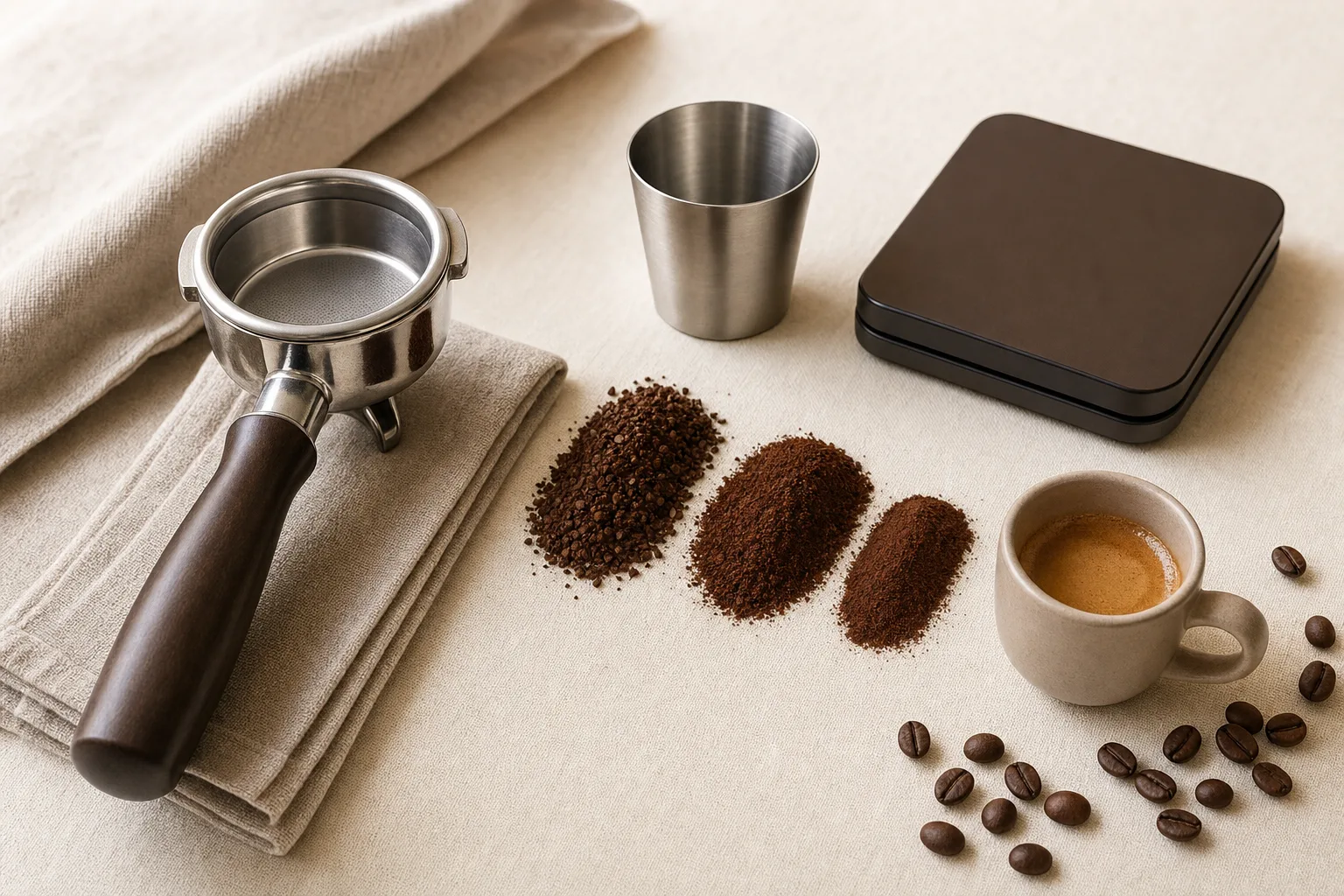
Use a medium-fine grind as your starting point: not sandy like drip grounds, and not powdery like a demanding single-wall espresso setting. Coffee Chronicler’s Grind Size Chart likewise notes that pressurized baskets can use a coarser setting than conventional espresso baskets.
If the flow barely starts, go a little coarser. If it rushes out pale and thin, go a little finer. Portafilter.net describes the useful range as flexible from fine to medium, which is exactly why a universal click chart would send you in the wrong direction.
What do you need before you start?
A pressurized basket is what most beginner espresso machines ship with, precisely because it forgives an imperfect grind. You need your pressurized basket, coffee, and a way to keep the rest of the routine steady. A scale and timer are helpful, not precious little barista gadgets: they simply stop a changing dose from pretending to be a grind problem. Many machines in our entry-level espresso machine picks include pressurized baskets, so pre-ground coffee is absolutely a fair place to begin.
Keep this simple
- Your pressurized or dual-wall basket and portafilter
- Coffee beans or pre-ground coffee
- A grinder, if you are grinding fresh
- A scale and timer, recommended for repeatable shots
Our Top Picks
How do you adjust grind size for a pressurized portafilter?
Start medium-fine, pull one normal shot, then change only the grind by one small move. That simple loop tells you more than chasing a number on somebody else’s grinder, because burr shape, coffee age, basket capacity, and machine programs all change what “right” looks like.
Step 1: Set a medium-fine starting point
Grind fresh coffee somewhere between drip and espresso, or use a decent pre-ground coffee made for espresso. Being able to use pre-ground at all is the practical appeal of these baskets, and part of why budget espresso machines almost all include one. Fill the basket evenly and use the same level tamp each time; do not turn tamping force into a second adjustment. Acquired Coffee notes that the basket itself creates resistance, which makes dual-wall baskets friendlier to imperfect preparation.
Step 2: Pull a shot and watch what it does
Use your machine’s normal program. A steady stream and a cup that tastes rounded is the goal. The basket is doing the hard part for you here, which is exactly what makes the easiest machines to use feel so forgiving out of the box. A few bubbles of crema can look great, but it is not a flavor scorecard; taste for sweetness and body instead of judging the tan foam alone.
Step 3: Make one small grind change
If it crawls, drips, or tastes over-restricted and heavy, go one step coarser. If it gushes and tastes thin, tart, or hollow, go one step finer. Keep the same coffee amount and tamp for the next pull. Otherwise you are moving three puzzle pieces and cannot tell which one fixed the cup.
What mistakes make a dual-wall basket harder to use?
The usual trouble comes from treating a pressurized basket like a fussy café basket. It is built to be forgiving, so use that advantage: avoid huge grind jumps, an overstuffed basket, and changing your tamp from shot to shot. Small, repeatable changes beat espresso heroics every time.
- Changing everything at once — Keep the dose and tamp the same while you adjust the grind.
- Going extremely fine — The basket already adds resistance, so powder-fine grounds can make the flow stall.
- Chasing tamp pressure — Level the grounds and use a consistent tamp; use grind size, not extra force, as your main adjustment.
How do you fix a slow or fast pressurized-portafilter shot?
Fix a slow shot by moving slightly coarser; fix a fast, thin shot by moving slightly finer. Make that one change first, then look at basket fill and cleanliness only if the problem remains. The shot is giving you a clue, not grading your worth before breakfast.
The shot barely drips or tastes over-restricted
Start with a slightly coarser grind. If the flow is still sluggish, make sure you are not filling above the basket’s intended level and rinse the basket’s outlet clean. Older coffee and a very full basket can also behave differently, so keep notes if you swap bags.
The shot gushes and tastes sour or watery
Go a little finer. Check that the basket is filled evenly, then pull again with the same tamp. If you use pre-ground coffee, accept that there is a limit to how much adjustment the basket can rescue; it can make a pleasant cup, but it cannot turn stale grounds into fresh ones.
When should you move to a single-wall basket?
Move to a non-pressurized, or single-wall, basket when you want to shape the shot more closely and have a grinder that can make small, repeatable espresso adjustments. The coffee bed then supplies the resistance, so it rewards fresh beans but exposes uneven grinding fast. For that upgrade, see our espresso burr grinder picks.
Do not rush it. A dual-wall basket is not a beginner failure; it is a practical tool for pre-ground coffee, older beans, and busy mornings. The single-wall route offers more control, but it also asks more from your grinder and your routine.
Frequently asked questions
What grind size should I use for a pressurized portafilter?
Start medium-fine: finer than typical drip coffee but not as powdery as a conventional espresso setting. A pressurized basket creates some resistance itself, so it is more forgiving. Move slightly finer if the shot gushes, or slightly coarser if it barely drips.
Can I use pre-ground coffee in a pressurized basket?
Yes. A pressurized basket is the sensible home for pre-ground coffee because its second wall helps create resistance even when the grind is not perfectly espresso-fine. You may see crema, but crema alone does not prove the coffee tastes sweet, fresh, or well extracted.
Should I grind finer for a pressurized portafilter?
Only when the shot runs very fast, looks thin, and tastes sharp or watery. Go one small step finer, then pull another shot without changing the dose or tamp. Grinding much finer all at once can turn a forgiving basket into a slow, muddy mess.
What grind size is best for a single-wall basket?
A single-wall basket needs a true espresso-fine grind, often noticeably finer and more repeatable than a pressurized basket needs. Start with coffee that resembles fine table salt, then adjust gradually. Your machine, coffee, dose, and grinder decide the final setting.
What grind size is best for a non-pressurized portafilter?
For a non-pressurized, or single-wall, basket, use an espresso-fine setting rather than medium-fine. The coffee puck supplies the resistance, so uneven or overly coarse grounds show up immediately as a fast, weak shot. A burr grinder makes this much easier to manage.
Why is my pressurized-portafilter shot slow?
A slow shot usually means the grind is too fine, the basket is overfilled, or the basket outlet needs cleaning. First make the grind slightly coarser and keep everything else unchanged. If it still crawls, check your basket’s fill line and rinse its outlet thoroughly.