 Coffee Gear Picks
How Do Home Espresso Machines Work? (2026 Guide)
Home espresso machines make espresso by heating water, building pressure, and pushing that water through a tight bed of finely ground coffee. Once you understand that path, the portafilter, pump, boiler, and steam wand stop looking like random metal parts.
How a Home Espresso Machine Makes a Shot
Water gets heated, pushed under pressure, squeezed through a coffee puck, then judged by flow and taste
- Add water to the tank
- Let the machine warm up
- Preheat the group head
- Boiler or thermoblock heats water
- Metal parts warm through
- Steam system waits separately
- Pump or lever moves water
- Pressure meets puck resistance
- Flow starts through the basket
- Water dissolves flavor
- Espresso collects in the cup
- Taste and adjust the next shot
A clearer mental map of what your machine is doing, so bad shots feel fixable instead of mysterious.
How do home espresso machines work?
Home espresso machines move water from a tank or plumbing line, heat it, then force it through finely ground coffee held in a portafilter. Understanding that chain is most of what you need to choose a sensible first machine. The coffee bed, called a puck, slows the water so the drink reaches the cup concentrated and, when the coffee and recipe cooperate, with crema on top. Commercial-size 58mm baskets are the ones most home machines aspire to — our 58mm portafilter machine picks show what that costs.
Clive Coffee explains that home machines commonly begin with a reservoir or direct water connection. Chris' Coffee describes the same basic route: water supply, pump, heat source, group head, portafilter, then cup.
What parts make a home espresso machine work?
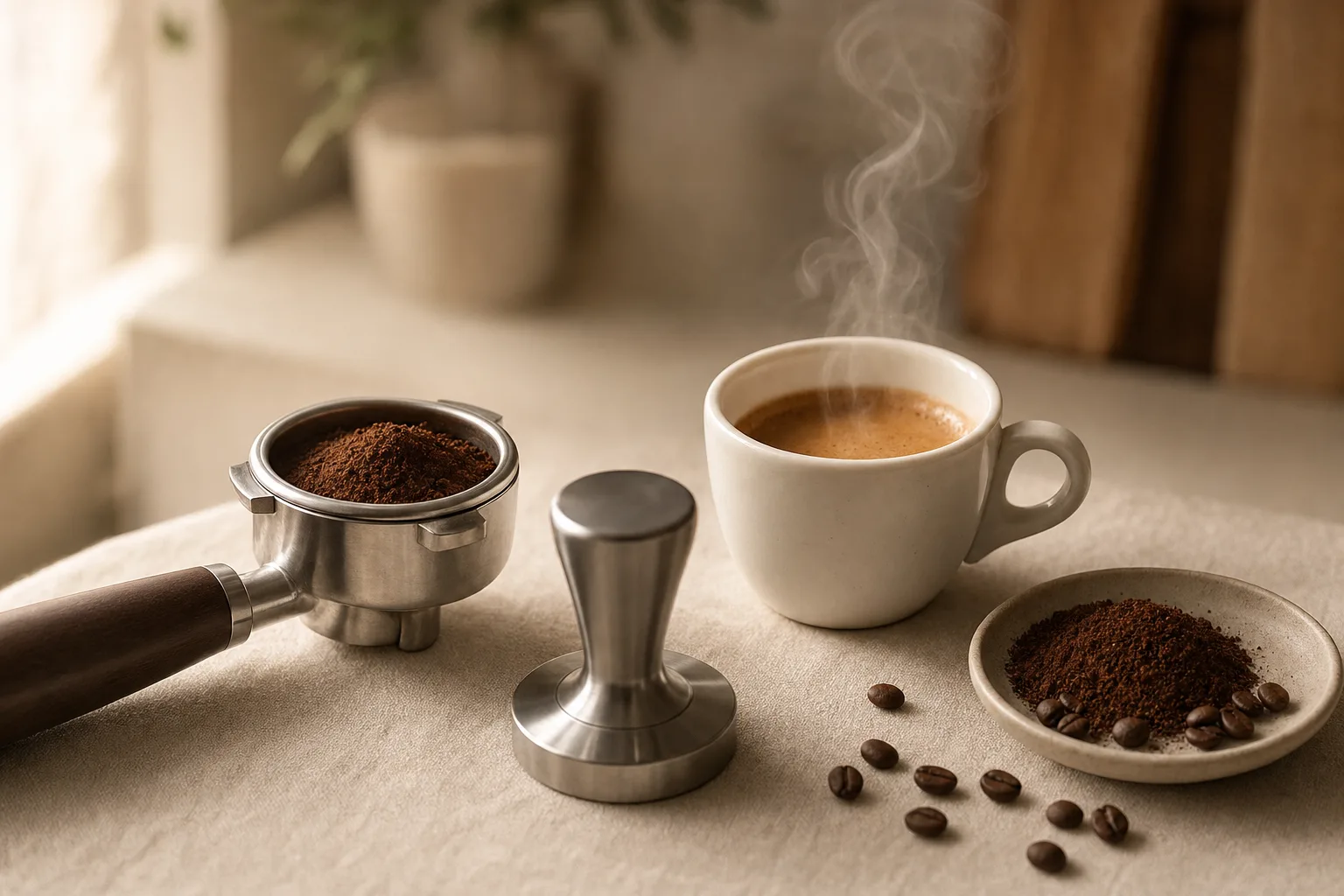
The core parts are the water reservoir, pump or lever, heating system, group head, portafilter, filter basket, and steam wand. The group head is the hot metal outlet where water enters the coffee. The portafilter is the handled basket holder that twists into the machine.
- Water reservoir: the removable tank most home machines draw from.
- Pump: the electric part that moves water toward the coffee.
- Boiler or thermoblock: the heater. A boiler stores hot water; a thermoblock heats water as it passes through a heated metal path.
- Portafilter basket: the metal cup that holds the ground coffee.
- Tamper: the flat tool that presses the grounds into an even puck.
- Steam wand: the small pipe that injects steam into milk for lattes and cappuccinos.
What happens during the espresso brewing sequence?
The brew sequence is simple: heat the machine, prepare the coffee puck, lock in the portafilter, then start pressure. Water follows the easiest available route, so a level, evenly prepared puck matters. If the puck has gaps, water can race through those channels instead of extracting the coffee evenly.
1. The machine heats water and metal parts
Fill the reservoir, turn the machine on, and give it time to warm up. The heater brings water toward brewing temperature, while the metal group head and portafilter also need to warm through. A cold portafilter can take heat from the brew water before it reaches the coffee.
2. You grind, dose, and tamp the coffee
Grind coffee fine, dose it into the basket, distribute it evenly, and tamp it level. This is the step a fully automatic machine removes entirely, grinding and tamping inside the machine on every drink. KitchenAid's espresso workflow outlines the same portafilter-and-tamp routine for home users. The goal is an even puck without obvious weak spots.
3. The pump or lever pushes water through the puck
Where the machine sits on that scale is the main thing separating semi-automatic machines, which pump for you but leave the grind and timing in your hands, from everything above and below them. On a pump machine, pressing the brew button starts an electric pump. On a manual machine, your hand moves a lever that creates pressure directly or loads a spring. Either way, the fine coffee puck supplies the resistance that lets the brew water extract coffee rather than simply rush into the cup.
4. The shot flows into the cup
The water pulls soluble flavor from the grounds — extraction is simply water dissolving coffee compounds into the cup. The Specialty Coffee Association treats extraction as a core brewing concept. At home, the useful takeaway is to watch the flow and taste the result before changing your recipe.
Common mistakes that make the machine seem broken
Most apparent machine failures are really puck, grind, heat, or workflow problems. The machine can move water, but it cannot correct uneven grounds or a cold brew path. Work through those simple variables before assuming the pump, boiler, or pressure system has failed.
- Grinding too coarse: the shot can run quickly, look pale, and taste thin or sour.
- Tamping crooked: water can favor the lower side of the puck and extract unevenly.
- Brewing too soon: a ready light does not always mean every metal part has fully warmed.
- Overfilling the basket: the puck can contact the shower screen and interfere with clean flow.
- Blaming pressure first: grind and puck preparation are often the more useful daily checks.
How do you troubleshoot espresso flow problems?
Start with the symptom and the likely restriction. Fast, pale shots often call for a finer grind or more even puck preparation. Very slow, dry-tasting shots often call for a slightly coarser grind or a dose check. Change one variable at a time so the next shot gives you a clear answer.
Shot runs too fast
The grind may be too coarse, the dose may be low, or the puck may have cracks. Grind a little finer and keep the dose steady. If you need a baseline, use our starting espresso grinder settings before making large adjustments.
Shot barely drips
The grind may be too fine, the basket may be overfilled, or the puck may be packed too densely. Go a little coarser, check the dose, and make sure the portafilter locks in without compressing the puck hard against the shower screen.
Shot tastes sour and hollow
Water may be passing through too easily or extracting too little from the coffee. Try a finer grind first. If flow is already slow, check that the machine and portafilter are fully warm and that the coffee is fresh enough to dial in.
Shot tastes bitter and dry
Water may be spending too long moving through the puck. Try a slightly coarser grind or stop the shot earlier on the next attempt. A bitter, dry finish is different from a deliberately dark, chocolatey coffee profile.
Why do grind size, dose, and tamp affect how the machine works?
Grind size, dose, and tamp control the resistance the machine works against. Fine grounds create more resistance, more coffee fills the basket more deeply, and a level tamp helps water spread evenly. That is why the grinder can matter as much as the machine itself.
If the puck is the gate, the grinder decides how open that gate is. Too open and water blasts through; too tight and flow stalls. If your grinder cannot make small espresso-fine changes, the machine has little room to compensate. Start with our espresso-capable burr grinder picks if your shots swing from sour to bitter with no sweet middle.
How does a manual espresso machine work compared with a pump machine?
A manual espresso machine uses your arm to create pressure, while a pump machine uses an electric pump. Manual levers offer direct involvement in the pressure part of the brew, but they add another variable to learn. Pump machines make that portion of the process easier to repeat on a busy morning.
Manual machines still need heat, fine coffee, a basket, and a puck. The difference is who provides the push. With a direct lever, your pull shapes the pressure. With a spring lever, you load the spring and it moves the water. With a pump machine, the motor does that job.
How can you use this knowledge to choose a home espresso machine?
Choose a machine by deciding which jobs you want automated. Beginners often do well with a pump-driven semi-automatic because it handles water pressure while you learn grinding, dosing, tamping, and milk. Manual machines can be rewarding, but they add another skill before the espresso basics are settled.
If you want a practical first setup without spending café-machine money, start with our beginner-friendly espresso machine picks under $200. Then leave room in the budget for the grinder: a capable grinder gives you a more useful adjustment range than a prettier machine paired with uneven grounds.
Frequently asked questions
How do home espresso machines create pressure?
Most home machines use an electric pump to move hot water toward the coffee puck. Manual lever machines use your arm, or a spring loaded by your arm, to create that push instead.
Does every home espresso machine use 9 bars of pressure?
No. Many machines advertise pressure around the classic espresso target, but pressure at the coffee puck can vary with the machine, grind, basket, and flow. Treat a pressure specification as useful context, not a guarantee of a particular shot.
What is the difference between a boiler and a thermoblock?
A boiler heats and stores a small volume of water, while a thermoblock heats water as it passes through a heated metal path. Thermoblocks often warm up quickly; performance depends on the machine design and how it is used.
How does a manual espresso machine work?
A manual espresso machine uses a lever instead of an electric pump. You grind, dose, tamp, add water where the machine requires it, and use the lever so pressure moves water through the coffee puck.
Why does my grinder matter if the machine makes the pressure?
The grinder controls how much resistance the coffee puck gives the machine. Too coarse, water rushes through. Too fine, flow slows dramatically and the shot can taste harsh or dry.
Can a cheap home espresso machine make real espresso?
A budget pump machine can make concentrated coffee with crema, particularly when paired with fresh coffee and a capable grinder. More expensive machines may offer different heat management, build quality, and control, but the puck and coffee still matter.