 Coffee Gear Picks
How Much Pressure for Espresso? 9 Bars Explained (2026)
Espresso needs about 9 bars of pressure at the coffee puck, not the 15 or 19 bars splashed across many machine boxes. Get that part right, then let taste and flow tell you whether your grind is opening the door to a syrupy, sweet shot or slamming it shut.
How to Get the Right Pressure for Espresso
Target 9 bars, measure, dial in, judge
Step 1 Target 9 bars
- Know your machine's spec: pump bars are not brew bars
- Aim for 9 bar at the coffee puck
Step 2 Measure what you get
- Use a bottomless portafilter to watch flow
- Or fit a pressure gauge (Flair includes one)
Step 3 Dial in the grind
- Grind fine, like table salt
- Pull 25–30 second shots
Step 4 Judge the result
- Crema plus balance means you are close
- Sour: grind finer; bitter: grind coarser
Result
Balanced, sweet espresso with rich crema
How much pressure does espresso need?
The short answer: espresso brews best at 9 bars, about 130 psi, measured at the coffee puck. A 15- or 19-bar pump does not make stronger coffee. Good machines regulate that pump pressure back to roughly 9 bars, the target in the Specialty Coffee Association espresso definition.
What do you need to check espresso pressure?
You need a machine, an espresso-capable burr grinder, and a scale before you need a gauge. Pressure only stays honest if temperature does too, which is why dual boiler machines hold both steady instead of trading one for the other. Repeatable dose creates repeatable resistance in the puck, so start with a scale with 0.1 g precision and a timer. A bottomless portafilter or gauge helps you see what is going wrong, but neither fixes a bad grind.
- Espresso machine: ideally one with an over-pressure valve.
- Burr grinder: fine enough to make grounds feel like table salt.
- Optional diagnostic tools: a bottomless portafilter and pressure gauge.
Our Top Picks




How do you dial in 9-bar espresso at home?
Set the machine to brew near 9 bars, then use the grind to make water move through the puck at a calm, steady pace. You are chasing a balanced shot, not a gauge number alone. Espresso Academy describes 9 bars as the standard starting point, while lower-pressure profiling is a deliberate variation for later.
Step 1: Separate pump pressure from brew pressure
Check the manual or manufacturer page for an over-pressure valve, often shortened to OPV, or a stated 9-bar extraction setting. Group design does a lot of this work quietly: E61 machines ramp pressure through the group itself rather than hitting the puck with full pump pressure at once. The pump rating is its ceiling, like a car's top speed, not where it cruises. Gaggia explicitly lists “9 Bar Espresso Extractions” for the Classic Evo Pro; that is more useful than a 15-bar badge.
Step 2: Watch the flow before chasing a gauge
Pull a shot through a bottomless portafilter if you have one. An even, centered stream that turns honey-colored is encouraging; spraying from one side means water is tunneling through a weak spot. The Home-Barista discussion on espresso pressure makes the same useful point: puck prep and grind decide whether that pressure gets used well.
Step 3: Change the grind, not everything at once
Keep your dose and yield steady, then adjust the grinder a small step. For a starting point, aim for 25–30 seconds, the convention used in James Hoffmann's espresso dialing-in videos. You need a grinder that can make tiny espresso adjustments, so see our espresso burr grinder picks or, for a lower-cost route, manual grinders for espresso under $100.
Step 4: Taste, then make one small correction
Taste before changing anything else. Sharp, lemony sourness and a fast, thin stream usually call for a finer grind. A dark, dry, bitter shot that drips painfully slowly usually needs a coarser grind. Coffee Data Science's 9-bar versus 6-bar experiments show why pressure changes the cup, but your grinder is still the everyday steering wheel.
Why do machines advertise 15 or 19 bars?
They advertise the pump's maximum because a bigger number sounds powerful, but espresso wants controlled pressure at the puck. An OPV bleeds off excess pressure so the coffee does not get battered by it. If you are shopping, prioritize that kind of control over the headline number in budget espresso machines under $200.
- Reading the pump label as brew pressure: it is a maximum, not the target.
- Using pre-ground coffee: it is usually too coarse or stale to create steady resistance.
- Fixing sourness with more pressure: grind finer first and keep the dose the same.
How do you fix a sour or bitter espresso shot?
Fix a sour, fast shot by grinding finer; fix a bitter, slow shot by grinding coarser. Those changes alter the resistance of the coffee puck, which changes how long water has to pull flavor from it. Keep the dose, yield, and tamp the same so the next cup gives you a clear answer.
Sour, thin, or fast
Make the grind a little finer and pull again. If it still gushes, check for clumps, an uneven bed of grounds, or a weak dose. A bottomless portafilter makes channeling obvious because the stream sprays or runs from one side.
Bitter, dry, or painfully slow
Make the grind a little coarser. Do not tamp harder to solve it, because a level, consistent tamp matters more than brute force. If the shot stalls, your puck is simply too resistant.
Which gear makes 9-bar espresso easier?
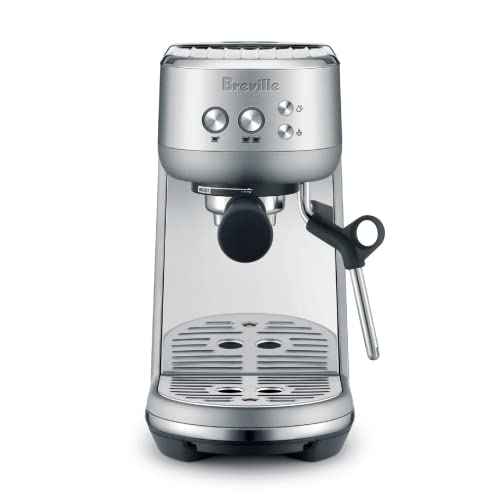
A stable machine and a capable grinder make 9 bars easier to use, but they do not replace dialing in. The Bambino Plus is the easy automatic route; the Flair 2GO is the useful learning tool because its gauge shows pressure as you press. Breville lists the Bambino Plus's 54mm, 19g portafilter and three-second ThermoJet heat-up on its manufacturer page.

Frequently asked questions
How many bars of pressure is espresso?
Espresso is conventionally brewed at 9 bars, about 130 psi, measured at the coffee puck. The Specialty Coffee Association definition specifies 9 ± 1 bar. That is a useful target, not a promise that pressure alone will make a good shot: grind, dose, yield, and temperature still matter.
Is a 15-bar espresso machine better than a 9-bar one?
No. Fifteen bars is usually the pump maximum, not the pressure used to brew. A good over-pressure valve regulates the brew near 9 bars. Higher pressure at the puck can encourage channeling, where water finds cracks in the grounds and makes a harsh, uneven shot.
What does 9 bars of pressure mean in psi?
One bar is about 14.5 psi, so 9 bars is roughly 130 psi at the coffee puck. It is a substantial squeeze on a thin bed of grounds, which is why espresso needs a fine, even grind and a consistent dose. The pump number printed on a machine is a separate maximum rating.
How do I know if my espresso machine has enough pressure?
Use a rich golden crema, a 25–30 second shot, and a steady stream rather than a gush or spray as useful starting signs. James Hoffmann uses that shot-time range as a practical starting point. Sour and fast usually means too little resistance, so grind finer; bitter and slow means grind coarser.
Can a moka pot or manual brewer make 9-bar espresso?
A manual lever brewer such as the Flair 2GO can reach roughly 6–9 bars when you press the lever and watch its gauge. Green Plantation explains that range, and the 2GO listing quotes the same figure. A moka pot runs at far lower steam pressure, so it makes intense coffee, not true espresso.
Should I worry about bars when buying an espresso machine?
Worry about regulated brew pressure, not a giant pump number on the box. Look for an over-pressure valve or a clear 9-bar extraction claim, such as Gaggia makes for the Classic Evo Pro. Pump bars alone say almost nothing about how your shot will taste.