 Coffee Gear Picks
How to Clean an Espresso Machine Breville (2026)
To clean a Breville espresso machine, do daily rinsing after brewing, run the tablet cleaning cycle when your compatible model calls for it, descale only with the approved process, and clean the steam wand after milk drinks. The big rule: your exact owner’s manual wins.
Clean Your Breville Espresso Machine Without Guessing
A manual-first routine for daily care, tablet cleaning, and descaling
Step 1 Prepare
- Check your model manual
- Empty drip tray and portafilter
- Remove old coffee grounds
Step 2 Daily clean
- Purge the group head
- Rinse baskets and portafilter
- Wipe and purge steam wand
Step 3 Tablet cycle
- Use cleaning disc if required
- Add approved tablet
- Run the model-specific cycle
Step 4 Descale
- Use approved descaler
- Remove water filter if instructed
- Run descale and final rinses
Result
A cleaner Breville machine and cleaner-tasting espresso.
Quick answer
Clean your Breville in two separate lanes: coffee-oil cleaning and mineral-scale removal. Daily rinsing keeps the brew head, portafilter, tray, and steam wand from getting crusty. Tablet cleaning removes old coffee oils from compatible machines, while descaling removes mineral buildup from the water path.
Breville separates routine cleaning from deeper maintenance in its step-by-step espresso cleaning guide and its Cleaning & Maintenance tutorial. That distinction matters because a tablet will not melt scale, and descaler will not scrub rancid coffee oil from the brew path.
What you'll need
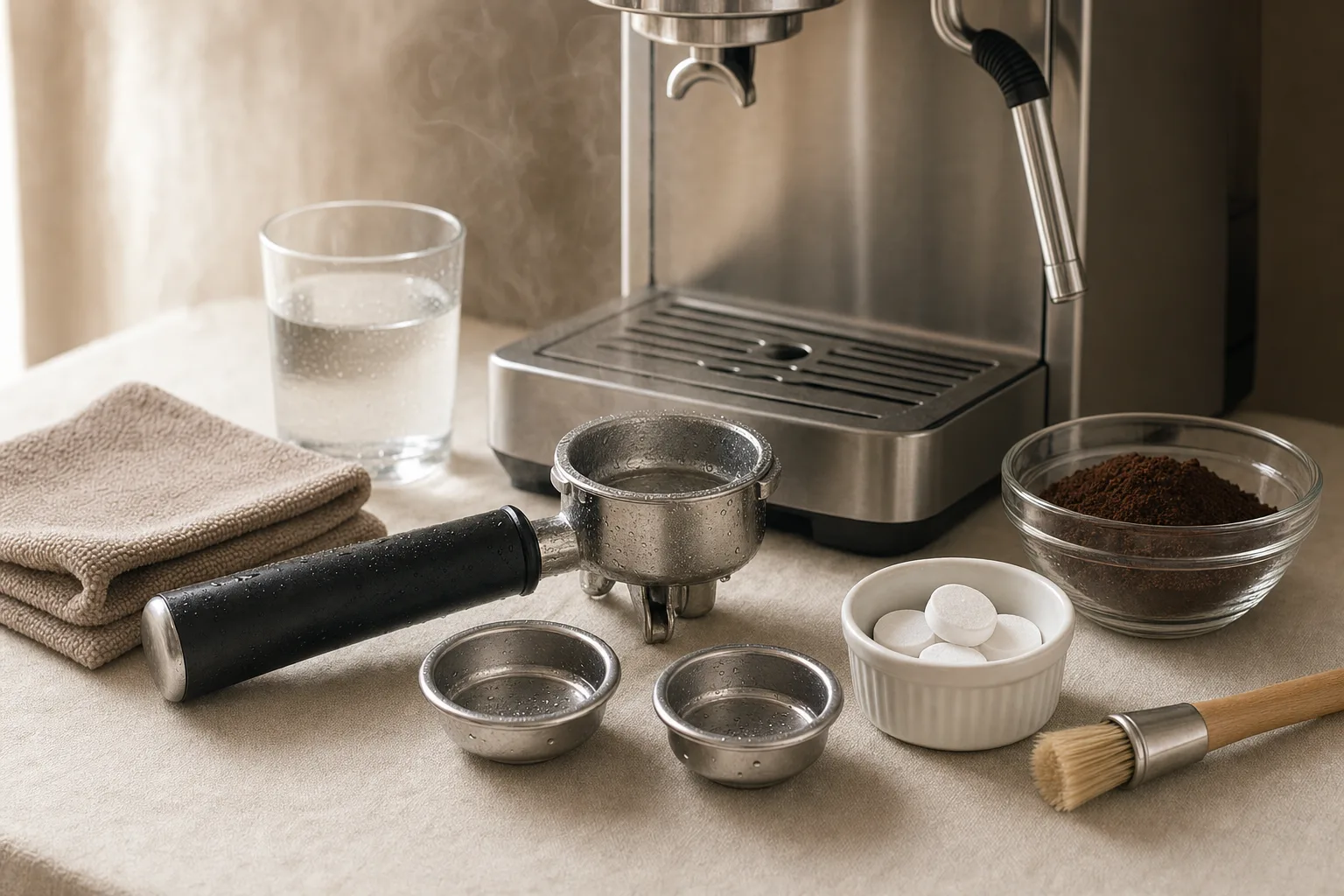
You need your exact Breville manual, clean water, a microfiber cloth, a small brush, compatible cleaning tablets, and the approved descaling product for your machine. Some Barista Express-style machines also use a cleaning disc and specific filter basket setup, but button sequences and accessories vary by model.
- Your model’s owner’s manual or Breville support page
- Breville-compatible espresso cleaning tablet for the cleaning cycle
- Approved descaling product for your descale program
- Microfiber cloth and small brush
- Clean water for rinse cycles
Our Top Picks
Step-by-step: clean the machine without mixing up cycles
Start with safe prep, handle the quick daily mess, run the tablet cycle only on compatible machines, then descale with the correct product and manual sequence. Do not copy a random button combo from another model. Breville controls change, and the wrong shortcut turns a simple clean into a headache.
1. Prepare the machine and check your model
Turn the machine off or put it into the cleaning mode your manual calls for. Empty the drip tray, knock out old grounds, remove the portafilter, and fill the tank as instructed. If your descale process says to remove the water filter, do that before descaling.
The Breville Barista Express BES870/BES875 manual includes model-specific cleaning and descale directions, including accessory setup. Use it as an example, not a universal script.
2. Do the daily clean after brewing
Purge the group head with water, rinse the portafilter and basket, empty the drip tray, and wipe the counter-facing surfaces. After milk drinks, wipe the steam wand with a damp cloth and purge steam so milk does not dry inside the tip.
This is the boring part that makes the biggest taste difference. Old espresso oils smell a bit like burnt nuts; dried milk smells sour fast. Breville’s espresso cleaning guide calls out the group head, portafilter, steam wand, drip tray, and water tank as routine care points.
3. Run the tablet cleaning cycle when your machine calls for it
For compatible machines, place the required basket and cleaning disc in the portafilter, add one approved cleaning tablet, lock in the portafilter, and run the cleaning cycle exactly as your manual says. This backflush-style cycle pushes cleaning water through the coffee path to remove oils.
Breville’s Barista Express cleaning-cycle tutorial shows the one-cup basket, cleaning disc, and tablet setup for that model family. Other Breville machines may prompt differently, so match the process to your machine.
4. Descale only with the approved descale process
Descale when your machine prompts you or when your manual’s guidance, water hardness, and usage point that way. Mix and add the approved descaling product as directed, run the descale program, and complete every rinse step before making espresso again.
Scale is mineral crust from water, not coffee grime. Think kettle chalk, not old espresso sludge. How often you meet it is mostly your water, not your machine, which is why the models we rate as easy to clean tend to be the ones with a filter in the tank and a drip tray you can actually reach. Breville’s Barista Express descale tutorial is clear that descaling is its own program, separate from the tablet cleaning cycle.
5. Final rinse, reassemble, and pull a plain water flush
Rinse the portafilter, basket, tank, drip tray, and any removable pieces your manual allows. Reinstall the water filter if you removed it, refill the tank with clean water, and run a plain water flush so the machine smells clean, not chemical.
If the first shot after cleaning tastes strange, dump it and pull another. A tiny leftover whiff of cleaner or loosened coffee oil can show up in that first cup. After a proper rinse, the espresso should taste cleaner and less muddy.
Common mistakes
The biggest mistakes are treating tablets and descaler as the same thing, copying button sequences from a different model, skipping the steam wand, and using random cleaning agents. Sequences differ across the range, so check yours against the current Breville line-up rather than a video for a machine that looks similar. Espresso machines are small boilers and valves, not soup pots. The manual matters more than internet shortcuts.
- Using tablets as descaler: tablets clean coffee oils; they do not remove mineral scale.
- Using descaler as a coffee-oil cleaner: descaler works on the water path, not the oily brew path.
- Skipping rinse steps: leftover cleaner can make espresso taste sharp and thin.
- Letting milk dry on the wand: wipe and purge right away, before it turns into crust.
Troubleshooting
If the machine still tastes stale, smells sour, flashes a prompt, or runs oddly after cleaning, do not keep pressing buttons at random. Recheck the manual, confirm whether you ran a cleaning cycle or descale program, and repeat only the rinse steps your model calls for.
The clean-me light is still on
The cycle may not have completed, or your model may need a specific final step. Go back to the Breville manual for your exact machine. The Barista Express family has its own sequence, and that sequence should not be treated as universal.
Espresso tastes chemical after descaling
Run the required rinse program again with clean water. Also rinse the tank and removable parts. If the smell hangs around, check that you used the approved product at the directed mix strength, not a stronger “just in case” batch.
The steam wand sputters or smells like milk
Wipe the outside, purge steam, and check the steam tip cleaning steps in your manual. Dried milk behaves like glue. The sooner you deal with it, the less you have to scrape later.
Source note: This guide follows Breville’s own cleaning overview, Cleaning & Maintenance tutorial, Barista Express cleaning-cycle tutorial, Barista Express descale tutorial, and the BES870/BES875 instruction manual linked above. Manufacturer instructions should beat third-party advice every time.
What else should you maintain on an espresso setup?
Your machine is only one part of the espresso routine. Clean water paths help, but stale grounds and a struggling grinder can still make shots taste flat or sour. Keep the grinder clean, use consistent grounds, and consider replacing tired entry-level gear when maintenance stops fixing the problem.
If your machine is cheap, leaking, or never heats evenly anymore, compare our picks for espresso machines under $200. If your shots gush one day and choke the next, our espresso burr grinder picks are worth a look because clean, consistent grounds are part of the routine too.
Closing checklist before your next shot
Before brewing again, make sure the tank is filled with clean water, the drip tray is seated, the portafilter and basket are rinsed, the steam wand is purged, and no cleaner smell remains. If your grinder also smells stale, clean that before blaming the espresso machine.
- Tablet cycle complete, if your compatible machine called for it
- Descale program complete, if your machine prompted for descaling
- Final rinse done with clean water
- Steam wand wiped and purged
- Grinder checked for stale grounds; use our burr grinder cleaning guide if it needs a reset
Frequently asked questions
Are Breville cleaning tablets the same as descaler?
No. Cleaning tablets remove coffee oils from the brew path during a compatible cleaning or backflush cycle. Descaler removes mineral scale from the water path. Treat them like dish soap and kettle descaler: both clean, but they clean totally different messes.
How often should I clean my Breville espresso machine?
Use the machine prompts, your owner’s manual, your water hardness, and how much espresso you make. Daily rinsing is smart after brewing, but tablet cycles and descaling should follow the model’s alert system or the manual’s schedule.
Can I use vinegar to descale a Breville espresso machine?
I would not use vinegar unless your specific Breville manual says to. Breville’s guidance points owners toward approved cleaning and descaling products. Vinegar can leave a sharp smell and may not match the machine’s descale program.
Why does my Breville still say clean me after I ran a tablet cycle?
The cycle may not have completed, the wrong button sequence may have been used, or your model may need a final rinse or reset step. Check the exact manual for your machine rather than copying instructions from a different Breville model.
Do I need to clean the steam wand every time?
Yes, wipe and purge the steam wand after milk drinks. Milk dries fast and turns into a sour-smelling film. A quick purge while the wand is still hot is much easier than scraping cooked-on milk later.