 Coffee Gear Picks
How to Grind Coffee for Espresso (2026): Dial It In
To grind coffee for espresso, start with a fine, even grind, then make tiny adjustments based on how the shot flows and tastes. Too coarse gushes and tastes sharp; too fine crawls, chokes, or turns bitter.
Dial In Espresso Grind Without Guessing
Keep the recipe steady, move the grinder slowly, and let the shot tell you what to do next.
- Pick one recipe
- Use fresh beans
- Start espresso-fine
- Weigh beans and output
- Keep dose fixed
- Write it down
- Adjust in tiny moves
- Purge stale grounds
- Break up clumps
- Tamp the same way
- Time the shot
- Taste before changing
- Fast or sour: finer
- Slow or bitter: coarser
- Change one thing
A repeatable grind setting that gives balanced espresso instead of random sink shots.
How fine should espresso coffee be ground?
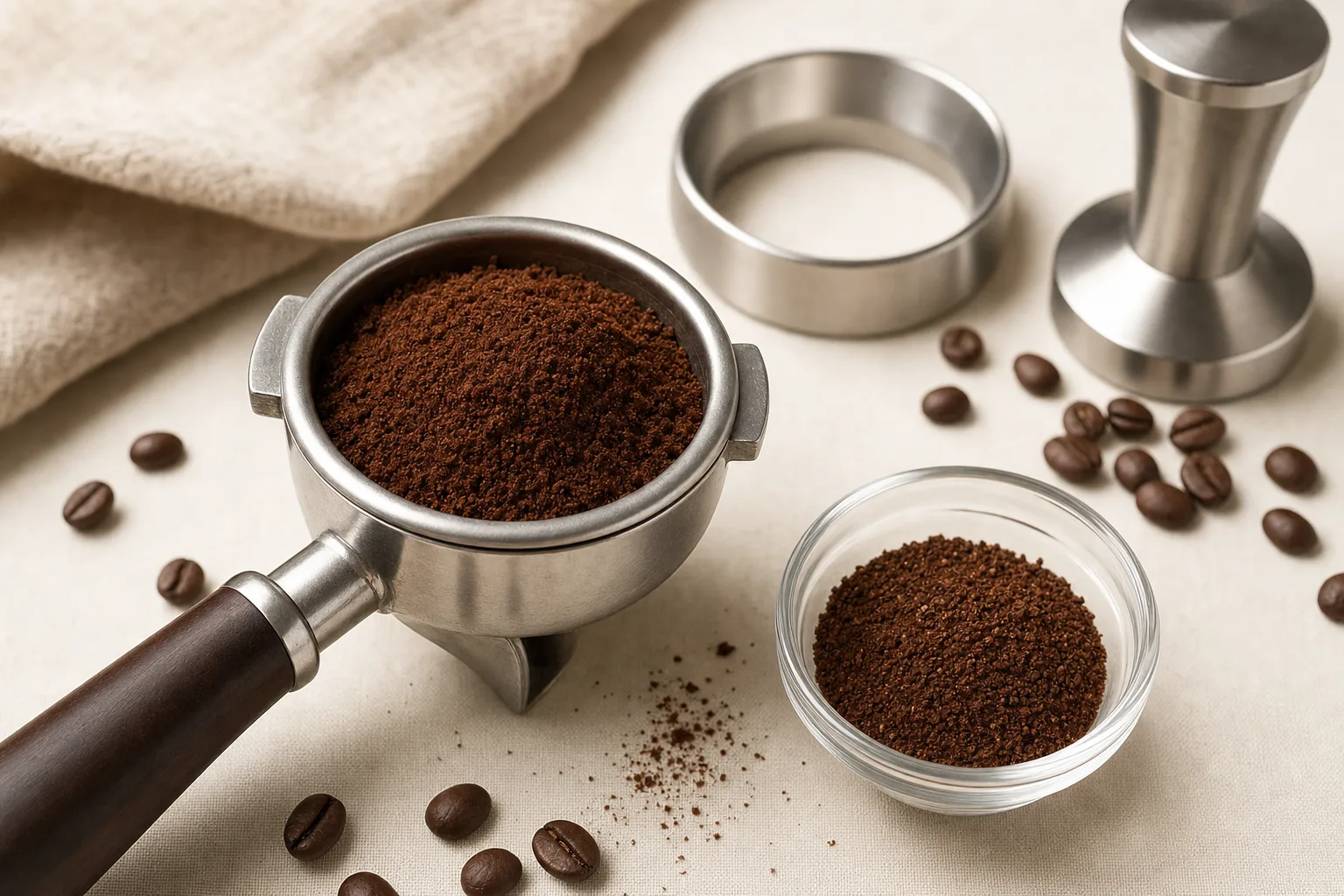
Espresso should start fine and even, closer to table salt than drip coffee, but not powdery dust. The exact setting depends on your grinder, beans, basket, machine, and recipe. Treat the setting as a starting point, then adjust by flow, yield, and taste instead of chasing one magic number.
Sweet Maria’s, “Espresso: The Grind” notes that espresso needs a very fine, consistent grind, and that clumping, heat, and distribution can affect the shot. UNIC describes the narrow window: the coffee needs enough resistance for pressure, but not so much that flow stalls or becomes uneven.
What do you need before you grind?
You need fresh whole beans, an espresso-capable burr grinder, a 0.1 g scale, a portafilter basket, and a timer. The grinder matters most: if it cannot make small, repeatable fine changes, dialing in becomes unnecessarily difficult.
Before your first shot
- Fresh whole beans, ground close to brewing time
- Espresso-capable burr grinder with fine adjustment control
- Scale accurate to 0.1 g for dose and yield
- Clean portafilter basket and a consistent tamp
- Timer or machine display to track flow changes
If your current grinder jumps from too fast to choked with no useful setting in between, look at our espresso-capable burr grinder picks. If you want manual equipment, our affordable hand grinders for espresso are a better starting point than a blade grinder.
Use a scale from the first shot. A coffee scale built for espresso dialing helps you hold dose and output steady while you change only the grind.
What steps dial in the grind without chasing your tail?
Lock in one recipe, weigh the same dose, grind fine, brew, taste, and adjust one small step at a time. Do not change dose, yield, tamp, beans, and grind together. When everything else stays still, the grinder change gives you a useful answer.
Step 1: Set one recipe and leave it alone
Pick a dose that fits your basket, then choose a target output you can repeat. The exact ratio is less important than keeping it steady for the first few shots. If you change the recipe every time, the shot becomes a moving target.
Step 2: Weigh and record the dose
Weigh the beans before grinding and the espresso after brewing. Record the grind setting, dose, output, time, and taste in plain words such as “sour,” “hollow,” “sweet,” or “dry.” Simple notes make the next adjustment clearer.
Step 3: Start fine, then move in small increments
Start in your grinder’s espresso range, then move finer or coarser in the smallest useful steps. CoffeeRoast Co. recommends small changes, but any click count is grinder-specific, not universal. For a deeper framework, use our grinder-setting guide for espresso.
Step 4: Brew, watch, and taste
Pull the shot with the same routine: distribute the grounds, tamp evenly, start the timer, and stop at the same output. Time helps diagnose the shot, but taste gets the final vote. A familiar time can still produce an unpleasant cup.
Step 5: Adjust one thing and repeat
If the shot runs fast and tastes sour, grind finer. If it drips slowly and tastes bitter or harsh, grind coarser. If it tastes close, make a smaller move and pull one more shot before changing anything else.
What mistakes make espresso grinding harder?
The biggest mistakes are using an uneven grinder, regrinding old coffee, making huge setting jumps, and changing too many variables at once. Espresso rewards a calm routine: keep the coffee fresh, the dose steady, and grinder moves small.
- Using a blade grinder — it makes dust and chunks, not an even espresso grind.
- Regrinding pre-ground coffee — Driftaway Coffee advises against regrinding already-ground coffee for espresso; grind whole beans close to brewing instead.
- Making giant changes — big jumps can skip past the useful range.
- Ignoring clumps — break them up before tamping so water is less likely to find a fast path through the puck.
How do you fix sour, fast, bitter, or slow shots?
Match the symptom to one likely fix, then pull another shot before making a second change. Fast and sour often points to a finer grind; slow and bitter often points to a coarser one. Random swings can signal retention, clumps, stale beans, or a dirty grinder.
Match the shot to the fix
Change one thing, brew again, then compare.
- Grind finer one small step
- Keep dose and yield the same
- Check for cracks in the puck
- Grind coarser one small step
- Do not raise dose yet
- Recheck the next shot before changing more
- Purge retained grounds
- Break up clumps
- Clean the chute and burr area
Small grind moves plus a steady dose give you a clean read on the next shot.
If output weight changes even when you weigh the input, retained grounds may be mixing into the next dose. When inconsistent output persists, clean a burr coffee grinder before assuming the machine or beans are at fault.
Frequently asked questions
How fine should espresso be ground?
Espresso should be ground fine and even, usually closer to table salt than regular drip coffee. It should not be so powdery that the machine chokes. The right setting is the one that gives balanced taste, steady flow, and repeatable yield.
Can I use pre-ground coffee for espresso?
You can use it in a pinch, but it is rarely ideal for dialing in. Espresso needs a narrow grind range, and pre-ground coffee may be too coarse, too stale, or matched to a different machine and basket.
Can I grind espresso with a blade grinder?
A blade grinder is not a good choice for espresso dialing. It chops beans into uneven bits, so some grounds over-extract while others under-extract. Use an espresso-capable burr grinder if you want controlled, repeatable changes.
Why does my espresso shot run too fast?
A fast shot usually means the grind is too coarse, the dose is low, or water is finding cracks through the coffee bed. Keep the dose and tamp steady first, then move the grinder finer in small steps.
Should I change dose or grind first?
Change the grind first once your recipe is set. If you change dose, yield, tamp, and grind together, you will not know what helped. Hold the dose steady, adjust grind, brew, taste, and repeat.