 Coffee Gear Picks
How to Make Espresso at Home: Simple 2:1 Recipe (2026)
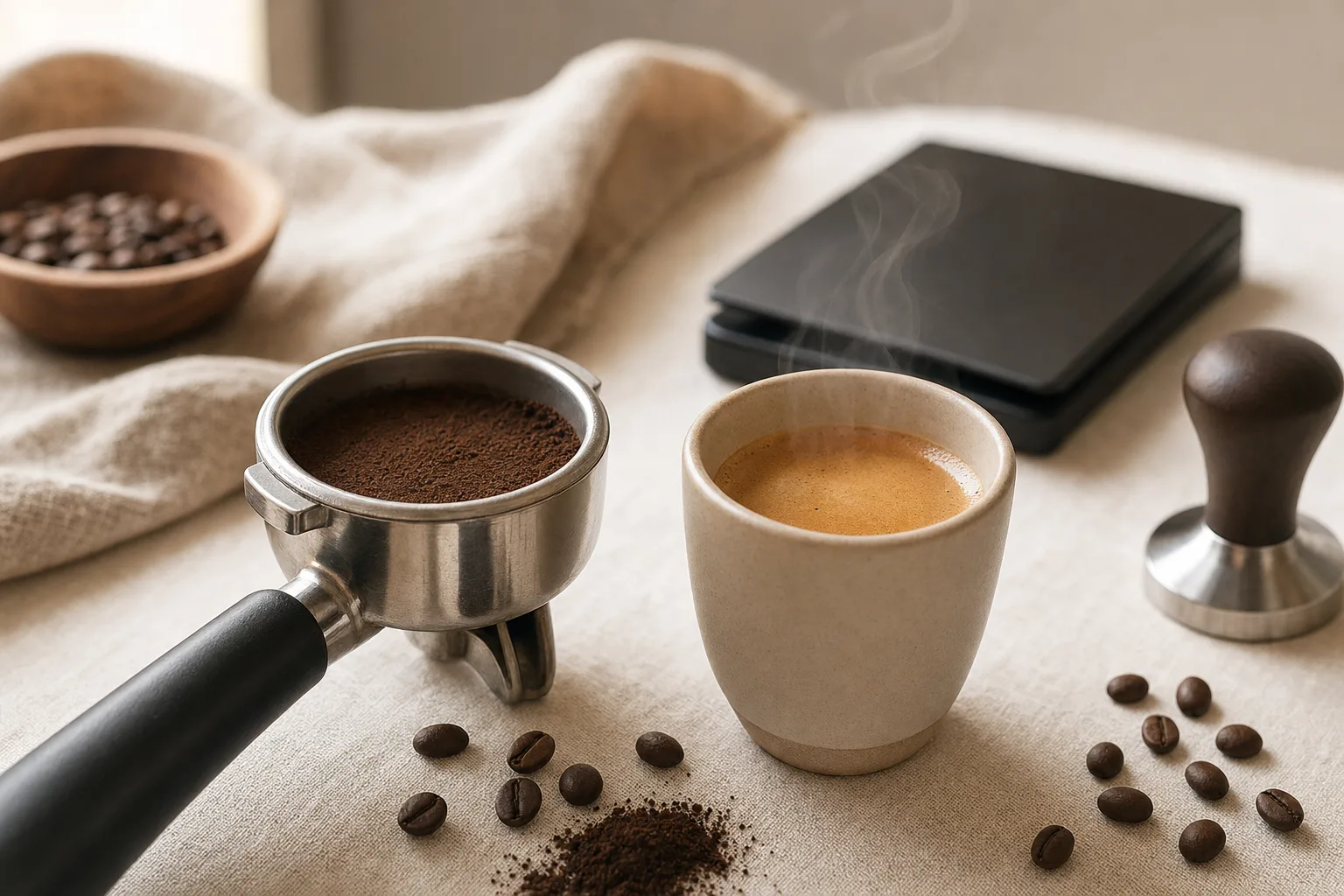
Make espresso at home by starting with 18 g of coffee, brewing 36 g into your cup, and aiming for 25–30 seconds. That simple 2:1 recipe gives you a dependable place to start instead of guessing from crema or cup volume.
A repeatable home espresso routine
Start at 18g in, 36g out, and 25–30 seconds—then adjust one thing at a time
- Warm machine and cup
- Choose 18g dose
- Dose 18g dry coffee
- Level the basket
- Grind espresso-fine
- Tamp level and steady
- Stop at 36g out
- Aim for 25–30 seconds
- Taste before changing
- Move one setting only
A balanced double shot with a recipe you can repeat tomorrow
The 2:1 espresso recipe
Use 18 g of ground coffee to make 36 g of espresso in roughly 25–30 seconds. “Dose” is the dry coffee you put in the basket, “yield” is the liquid espresso in the cup, and shot time starts when you turn on the pump.
That ratio is a widely used launch point, not a magic spell. Steampunk Coffee Roasters’ “Getting started with home espresso” uses the same 18 g-in, about-36 g-out example. A scale makes the process honest: CoffeeGeek’s “How to Make an Espresso” recommends measuring dose, output, and flow instead of trusting a little cup’s volume marks.
What you'll need
You need a machine, an adjustable burr grinder, and a small scale; everything else supports those three. You do not need to spend heavily to start: budget espresso machines pull a genuine shot, and the grinder is where the first upgrade usually pays off. If you still need a first machine, start with our low-cost espresso machine guide rather than buying the first shiny box you see.
- Whole beans: Choose beans you enjoy drinking, ideally a forgiving medium roast for your first few shots.
- Espresso machine, portafilter, basket, tamper, and cup: Warm them before brewing so the first sip is not lukewarm.
- Espresso-capable burr grinder: Burrs produce a more consistent grind than a blade grinder, and espresso needs very small, repeatable adjustments. KitchenAid’s home espresso guide also calls for burr-ground beans before extraction. Because tiny grind moves matter here, see our espresso grinder picks.
- Scale accurate to 0.1 g: Put the cup on it so you can stop at 36 g, every time.
Pull a double shot, step by step
Pull your first double shot with the same 18 g dose, 36 g yield, and 25–30 second target every time. Keeping the recipe fixed turns a frustrating mystery into a small, solvable adjustment.
1. Warm the machine, portafilter, and cup
Turn the machine on, lock in the empty portafilter, and run a little water through the group head. Warm-up time varies enormously between machines, and a short one is among the most underrated features of a good first machine. Warm the cup with that water, then empty it. Cold metal steals heat from espresso quickly, leaving a shot that can taste flat before you have even touched the grinder.
2. Weigh 18 g, grind, and level the basket
Weigh 18 g of beans and grind them at an espresso-fine setting; the exact setting depends on the grinder. Put all the grounds in the basket, gently break up any visible clumps, then level the bed. You want water to meet an even surface, not find one easy tunnel down the side.
3. Tamp once, level and steady
Place the portafilter on a flat surface and press the tamper straight down until the coffee feels compact. You do not need superhero force. A level tamp matters more than a dramatic one; wipe stray grounds from the rim so the portafilter seals cleanly.
4. Brew into the scale and stop at 36 g
Set your cup and scale under the spouts, tare it, then start the pump. Watch both the timer and the scale. Stop the shot at 36 g, even if the crema looks pretty, and note whether that happened before 25 seconds, after 30, or right on target.
5. Taste, then change one thing
Stir the espresso and taste it while it is warm. A good starting shot should feel sweet and rounded, with some weight on the tongue, not thin and lemony or dry like oversteeped tea. Change only the grind for the next shot; leave dose and yield alone until you know what the grind move did.
Mistakes that muddy the result
The fastest way to lose the plot is changing several things after one disappointing shot. Keep the 18 g dose and 36 g yield steady while you figure out the grind, then write down the setting that tastes good.
- Eyeballing the dose: A heaped basket can differ by grams. Weigh it.
- Stopping by volume: Crema takes up space and fades, so a “double” line on a cup can fool you. Stop by weight.
- Leaving the machine cold: Flush and warm the cup first, especially for the first drink of the day.
Fix sour, bitter, fast, and slow shots
Let taste and shot speed point you to one small grind adjustment. Grind finer when a shot is sour and fast; grind coarser when it is bitter and slow, then pull the same 18 g to 36 g recipe again.
Diagnose your shot
Match what you taste or see to the next move
- Grind a little finer
- Keep 18 g dose and 36 g yield
- Grind a little coarser
- Stop at 36 g, not later
- Fast: finer grind
- Slow or dripping: coarser grind
Make one targeted move, then taste the next shot before changing anything else
Sour and thin, or done in under 25 seconds
Grind finer by one small step and keep everything else identical. Finer grounds slow the water so it can pull more sweetness; for click-by-click help after that first adjustment, use a more detailed espresso grind-setting guide.
Bitter, dry, or still dripping after 30 seconds
Grind a little coarser. If the shot barely drips, do not pack in extra coffee to fix it—that usually makes the traffic jam worse. Return to 18 g, use a level tamp, and let the coarser setting open the flow.
Frequently asked questions
What is a good beginner espresso recipe?
Start with 18 g of dry coffee and stop the shot at 36 g in the cup. Aim for about 25–30 seconds from pump-on, then taste it. That 2:1 ratio is a sturdy starting point, not a rule you can never bend.
Why does my espresso taste sour?
Sour espresso often means the water moved through the puck too quickly to pull enough sweetness from the coffee. Grind a little finer, keep the 18 g dose the same, and pull the shot again. If it is still sharp, check that the machine was properly warmed up.
Why is my espresso bitter?
Bitterness often means the shot ran too long or too slowly. Grind a little coarser first and stop at your 36 g target. Do not change dose, yield, and grind together, or you will not know which move helped.
Can I make espresso without an espresso machine?
You can make concentrated coffee with a moka pot or AeroPress, but it is not the machine-based espresso workflow here. This guide uses an espresso machine, a portafilter, and a measured shot recipe.