 Coffee Gear Picks
Immersion vs Slow Drip Cold Brew (2026)
Choose immersion for easy overnight cold brew. Choose slow drip if you want a lighter, brighter cup and enjoy tending a visible brewing ritual.
Ready to compare actual brewers? Our Best Cold Brew Coffee Maker (2026): 7 Smart Picks covers the complete shortlist, including capacities and daily workflows.
Immersion vs slow drip: the format comparison
Immersion soaks the grounds; slow drip passes water through them. JavaPresse Coffee Company explains these two routes to cold extraction, meaning pulling flavor from coffee without hot brewing. A concentrate brewer and a refrigerator pitcher can both use immersion, despite looking quite different on your counter.
| Method | Best for | Price band | Time example | Verdict |
|---|---|---|---|---|
| Immersion | Low-fuss batches; milk drinks | $–$$ | OXO: 12–24 hours | The practical everyday choice |
| Slow drip | Brighter black coffee; brewing ritual | $$$ | Yama: 3–4 hours | Faster elapsed brew, more involvement |
Immersion: mix, wait, separate
Water and grounds stay together until you lift the filter or drain the batch. The OXO listing specifies a Rainmaker top to distribute water and a brew-release switch. That top does not make it slow drip: the coffee still steeps before draining.
Slow drip: water moves through the coffee
A tower holds water above the grounds and collects coffee below. Seattle Coffee Gear describes the added attention to flow and technique. Think of it as a small kitchen project, not an appliance you fill before rushing out the door.
What matters before you buy?
Start with how you drink your coffee, then check batch strength, storage space, and cleanup. Brew time alone is a poor buying rule: an overnight soak can demand less attention than a shorter tower brew. The useful question is how much work you want between opening the beans and pouring a glass.
Flavor: rounded body or brighter detail?
WIRED’s cold-brew guide describes slow drip as lighter and brighter than immersion. Picture a clearer, more lifted cup rather than a heavier, rounded one. That is a broad tendency, not a guarantee that every tower brew will taste better.
For a generous splash of milk, immersion is the sensible starting point. For sipping black over ice, slow drip’s flavor direction may be worth the extra fuss. Beans and recipe still matter, so do not expect a different vessel to rescue coffee you dislike.
Strength and capacity are different things
The OXO listing specifies a 32 oz concentrate carafe, a borosilicate glass carafe, stainless steel mesh, and a 3.7 lb weight. Concentrate needs dilution, so that carafe can supply more finished drink than its size suggests. Follow the recipe rather than filling to the brim and guessing.
For larger pitchers, compare the County Line Kitchen 64oz Cold Brew Maker, with a glass mason jar and stainless steel mesh, against the Primula Burke Deluxe Cold Brew Maker, listed at 52 oz with a removable mesh filter. These are vessel capacities, not guaranteed finished yields: grounds take up room and hold water.
Space and materials: measure before ordering
The Yama 6–8 Cup Cold Brew Tower listing specifies 32 oz, labeled as 6–8 cups, at 9.8 lb. Its borosilicate glass and real wood frame measure 12 x 9 x 25.4 inches. Check overhead clearance, not just counter width. Those small “cups” are not six large iced tumblers.
A refrigerator pitcher makes a different trade. The Takeya Deluxe Cold Brew Maker uses a 1-quart BPA-free Tritan pitcher with an airtight leakproof lid. The Hario Mizudashi Cold Brew Maker offers 1000 ml in heatproof glass with a removable fine-mesh filter. Choose between lighter plastic and glass, then check your shelf height.
Grind, sediment, and cleanup
JavaPresse’s method guide favors coarse grounds for immersion. Start with the brewer’s instructions; avoid powdery coffee that can leave sludge or make draining tedious. Our Best Coffee Grinder for French Press (2026): 7 Top Picks covers coarse-grind choices for fewer fines, the tiny particles that complicate filtration.
For cleanup, count the pieces you must empty, rinse, and dry. The OVALWARE RJ3 Cold Brew Maker listing specifies 51 oz / 1.5 L, borosilicate glass, an 18/8 stainless steel filter, and coffee-and-tea versatility. A reusable filter still needs cleaning; “reusable” does not mean maintenance-free.
What do the price bands buy you?
The lowest band already covers straightforward immersion brewing. Moving up buys a different serving or draining setup; the premium tower buys a different process and presentation. Spend for a feature you will use, not a promise of better beans in the cup. The bands below describe the formats covered here.
| Band | What you get | Main trade-off |
|---|---|---|
| $ | Simple immersion pitchers and large jars | You lift and drain the filter yourself |
| $$ | Switch-release concentrate brewing or sealed glass formats | Extra features do not eliminate cleaning |
| $$$ | Glass slow-drip tower and display frame | More space and careful assembly |
Mistakes that lead to the wrong brewer
Avoid buying cold-brew equipment by appearance or a single headline number. “Faster” can hide extra attention, and a large capacity can describe the vessel rather than your finished drink. Before ordering, read the recipe and picture where each part will go during brewing, draining, washing, and storage.
- Confusing cold drip with hot drip. A slow-drip tower uses cold extraction, not the quick hot-water cycle of an electric coffee maker.
- Assuming every glass part is dishwasher-safe. Follow the model’s care instructions, especially for a multi-part tower.
- Buying without checking replacement filters. Confirm what is reusable and what needs replacing before choosing a format.
Choose your next step
Choose dedicated cold extraction only if its waiting period suits your routine. If you actually want coffee within minutes, a hot brewer may be the better purchase. If you want freshly ground beans without separate appliances, look at grind-and-brew machines instead of trying to make a cold-brew pitcher do everything.
For faster hot brewing, Best Drip Coffee Maker Under $100 (2026): 8 Smart Picks compares hot-brew machines. For broader grinder-and-brewer automation options, see Best Coffee Maker with Grinder (2026): 7 Top Picks.
Sticking with immersion concentrate? Check the OXO’s current listing and care instructions before deciding.
View OXO on Amazon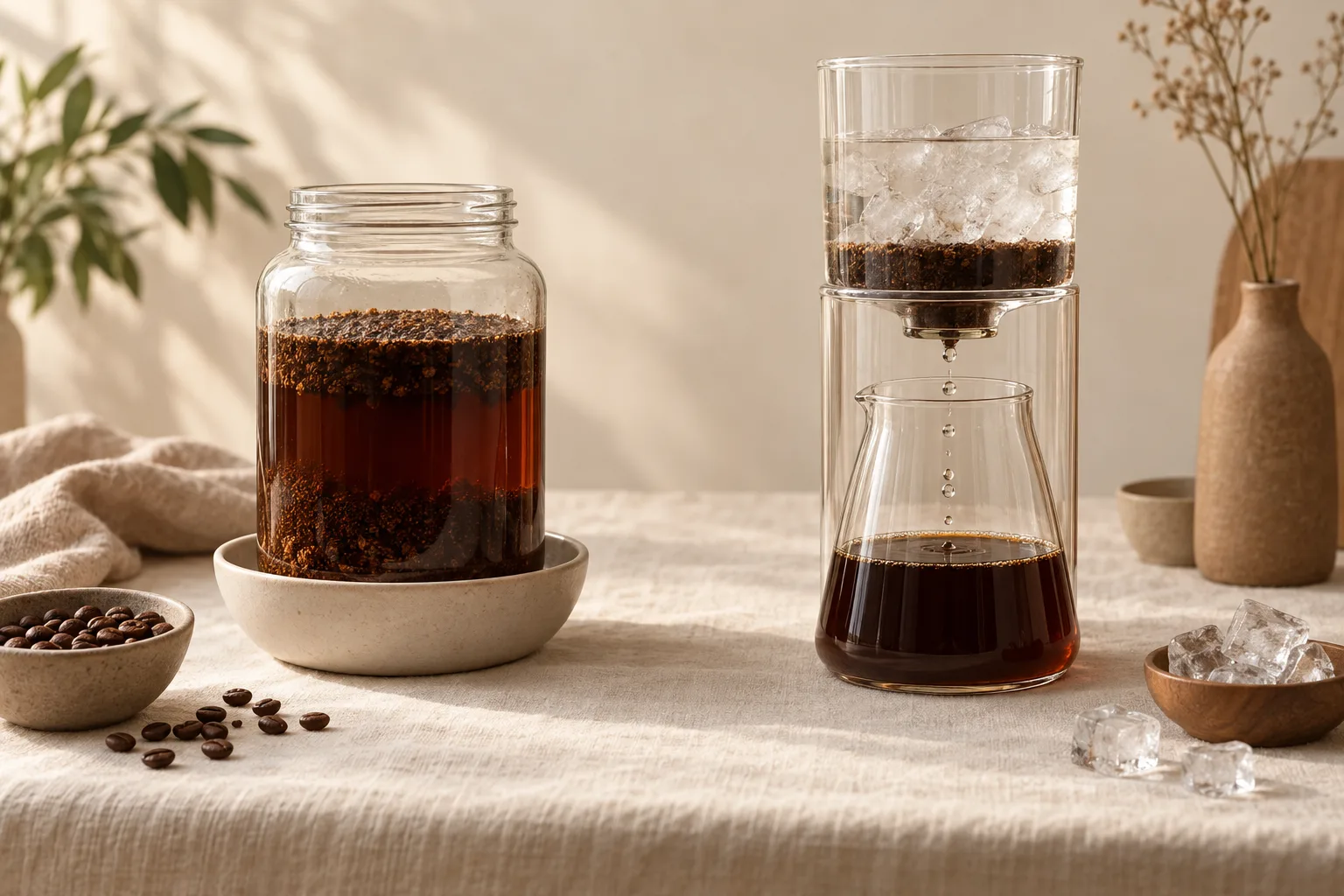
Frequently asked questions
What is the difference between immersion and slow drip cold brew?
Immersion keeps coffee grounds submerged in water, then filters the batch. Slow drip sends water through a bed of grounds into a separate vessel. JavaPresse Coffee Company explains that distinction: soaking favors a simple waiting period, while slow drip adds flow control and more setup.
Does slow drip cold brew taste better than immersion?
Neither method wins for every palate. WIRED describes slow drip as lighter and brighter than immersion, which tends toward a fuller cup. Choose slow drip for black iced coffee if that profile appeals; choose immersion when you want a rounded base for milk.
How long do immersion and slow drip cold brew take?
The OXO listing specifies 12–24 hours for immersion, compared with 3–4 hours for the Yama tower. Those are model-specific ranges, not promises for every brewer. Slow drip finishes sooner, but you still need time to set up and check the flow.
Is immersion cold brew always concentrate?
No. Concentrate means coffee brewed strong enough to dilute before drinking; immersion describes how water meets the grounds. Follow the brewer’s recipe rather than assuming a pitcher makes concentrate. OXO is designed around concentrate brewing, while pitcher formats also suit ready-to-pour recipes.
Can a refrigerator pitcher make slow drip cold brew?
A standard pitcher with a submerged filter makes immersion cold brew, not slow drip. Seattle Coffee Gear distinguishes soaking from water passing through the grounds. Pouring a finished immersion batch slowly through a filter does not turn the brewing process into slow drip.
Which cold brew method is easier to clean?
A removable-filter immersion pitcher is the simpler starting point because you handle a vessel, lid, and filter rather than stacked glass chambers. Check each maker’s cleaning instructions. The Primula listing specifies a dishwasher-safe design; do not assume every glass brewer or tower has that permission.