 Coffee Gear Picks
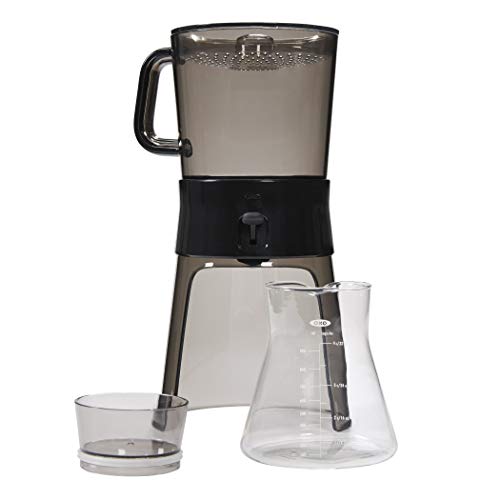
OXO Cold Brew Coffee Maker Review (2026)
The OXO Brew Cold Brew Coffee Maker is worth buying if iced coffee is a regular habit and you want concentrate, not a ready-to-pour pitcher. It earns our editorial score of 4.3 out of 5, with overnight planning as the main catch.
Still choosing a brewer format? Our Best Cold Brew Coffee Maker (2026): 7 Smart Picks compares concentrate brewers, simpler pitchers, and slow-drip options.
Verdict: Worth buying for repeat concentrate brewing, with thoughtful water distribution and controlled draining; less appealing for occasional iced coffee.
Best for: Regular cold-brew drinkers who want concentrate and do not mind overnight planning.
Our rating: 4.3/5
Pros
- ✓ Rainmaker top spreads water across the grounds
- ✓ Concentrate format lets you adjust each drink
- ✓ Brew-release switch gives you control over draining
- ✓ Reusable stainless steel mesh filter
- ✓ Marked glass carafe and parts that separate for cleaning
Cons
- ✗ Overnight lead time and an extra dilution step
- ✗ Tall, multi-part setup needs counter and storage space
- ✗ Glass carafe needs care around sinks and hard surfaces
- ✗ Higher price band than basic pitcher brewers
Verdict in detail
Buy the OXO if you like making coffee ahead and choosing the strength of each glass. Its appeal is control without much fuss, not instant brewing. Skip it if you want to pull a pitcher from the fridge, pour a full serving, and put it straight back.
The important distinction is that the extra equipment does not remove every job. You still measure coffee, wait, empty wet grounds, and wash parts. What you gain is a purpose-built way to wet the grounds and separate the finished coffee. CNET’s OXO review makes the premium-versus-frequency tradeoff especially useful: buy for the habit you already have, not the one you hope to start.
Prices change often. Check the current price on Amazon.
Specifications
| Carafe capacity | 32 oz cold brew concentrate carafe |
|---|---|
| Weight | 3.7 pounds |
| Dimensions | 9.53 x 9.53 x 14.72 inches |
| Carafe | Borosilicate glass with measurement markings |
| Filter | Ultra-fine reusable stainless steel mesh |
| Steep time | 12–24 hours |
| Main features | Rainmaker top and brew-release switch |
| Dishwasher-safe parts | Filter and carafe; hand-wash remaining parts |
| Price band | $$ |
Brewing and daily use
The OXO’s strongest feature is the separation between brewing and serving: steep in the upper chamber, then release the coffee into the carafe. That gives you more control than simply lifting a filter from a pitcher. It also means more pieces to assemble, wash, and find room for.
Rainmaker: useful water distribution, not a magic lid
The Rainmaker is a perforated top that spreads your pour over the coffee bed. Think of a gentle shower rather than a single stream digging into one spot. OXO describes it as a way to distribute water evenly, which is a sensible feature for a brewer you want to use repeatedly without fussing over your pouring technique.
It does not measure the ingredients or choose a recipe for you. Follow OXO’s filling instructions, then keep your coffee dose and water amount consistent between batches. Otherwise, a change in strength could come from the recipe rather than the brewer. The lid earns its place by simplifying one job, not by turning the whole process automatic.
Concentrate quality: strength you adjust in the glass
Wirecutter’s cold-brew comparison favors the OXO for flavorful concentrate and also examines setup and cleaning. That independent assessment supports the recommendation, but it is not a promise about every bag of beans. Your coffee, recipe, and dilution still shape what ends up in the glass.
The practical benefit is room to adjust. If you like milk-heavy iced coffee, concentrate lets you add milk without starting from an already diluted drink. If you prefer black coffee, add water until the strength feels right. Epicurious’s OXO review explains this concentrate-versus-ready-to-drink distinction. Do not judge the batch by drinking it undiluted unless that is genuinely how you want to serve it.
Brew time: easy to schedule, impossible to rush
OXO’s 12–24-hour steep makes this a planning appliance. Choose a start time that leaves you free to drain the batch later, rather than assuming any overnight stretch will suit your schedule. A late-evening setup can work well; starting just before breakfast cannot solve that morning’s coffee shortage.
Cold brew is also a different choice from hot coffee poured over ice. If your real priority is a fresh pot without an overnight wait, browse Best Drip Coffee Maker Under $100 (2026): 8 Smart Picks for hot-brew machine options. I would settle that question before buying extra gear: do you want cold extraction, or simply a convenient batch of coffee?
The OXO batch workflow
Plan the wait, then keep brewing and serving separate
Step 1 Prepare
- Assemble the clean brewer
- Measure coffee and water using OXO’s recipe
Step 2 Steep
- Leave the coffee to brew
- Choose a drain time that fits your day
Step 3 Drain and serve
- Position the carafe and release the coffee
- Dilute your serving with water or milk
Result
The waiting happens ahead of time; mixing your drink happens when you want it.
Release switch: the most convincing convenience feature
The brew-release switch lets you decide when the finished coffee drains into the carafe. That is the feature that most clearly improves on a basic jar-and-filter arrangement. You are not trying to hold a heavy, dripping basket above your serving container while deciding where to put the wet grounds.
There is still a handoff to manage. Put the carafe in position before releasing the coffee, use a stable surface, and allow time for draining. The switch controls the outlet; it does not make draining instant. If the flow seems wrong, consult OXO’s troubleshooting instructions before poking at the filter or trying to force liquid through the grounds.
Coarse grinding: keep powder out of the batch
Use the coarse grind OXO recommends rather than espresso-fine powder. Picture chunky grains rather than flour. Very small particles, often called fines, are the dusty bits mixed into ground coffee. OXO’s brewing guidance is the right starting point because the filter and draining arrangement are designed around its recipe.
If your grinder leaves a mix of large chunks and dust, our Best Coffee Grinder for French Press (2026): 7 Top Picks offers choices for more consistent coarse grounds and fewer fines in immersion brewing. Immersion simply means the grounds soak in water. You do not need espresso-level precision here, but keeping the grind similar from batch to batch makes recipe changes easier to understand.
Counter space and glass: measure before ordering
The assembled brewer is taller than a plain serving pitcher, and the upper chamber needs a home when you are not brewing. Measure the space where you will fill it, not just an empty patch of countertop. Check that an overhead cupboard will not make removing the top awkward.
The clear, marked carafe helps you see how much concentrate remains, but borosilicate glass is still glass. Set it down gently and keep it away from crowded sink edges. I would not choose this design for a household that specifically wants a shatter-resistant pitcher. That is a material preference worth respecting, not a small objection to talk yourself out of.
Cleanup: accessible parts, but wet grounds remain your job
OXO lists the filter and carafe as dishwasher-safe, with the remaining parts requiring hand washing. The brewer comes apart, so you can reach the coffee-contact surfaces instead of rinsing blindly around a fixed insert. Wirecutter’s comparison also treats cleaning as part of the buying decision, rather than an afterthought.
Expect to empty the grounds before washing anything. Scoop them into your chosen waste container, rinse the mesh carefully, and clean the other parts according to OXO’s instructions. Dishwasher-safe does not mean grounds disposal disappears. If that wet-ground step already annoys you with a French press, do not assume a dedicated cold-brew maker will make you enjoy it.
Dilution and yield: count drinks, not just ounces
The 32-ounce figure describes the concentrate carafe, not 32 ounces of finished iced coffee at one fixed strength. That matters when comparing the OXO with a larger ready-to-drink pitcher. The amounts are not directly interchangeable: one is intended to be mixed, while the other may be brewed at serving strength.
For a simple planning example, mixing 4 ounces of concentrate with 4 ounces of water gives you 8 ounces before ice. That is arithmetic, not a prescribed OXO recipe or a guaranteed batch yield. Use the manufacturer’s dilution guidance first, then note your preferred mix. This lets you judge whether one batch covers your routine without relying on vague cup counts.
Alternatives worth considering
The Takeya Deluxe Cold Brew Maker is the alternative I would consider for a simpler refrigerator-pitcher routine, especially if avoiding glass matters. Its Tritan pitcher and fridge-door-friendly shape serve a different priority from OXO’s separate brewing and concentrate-storage setup. Choose that format when easy pouring matters more than controlled draining.
The Hario Mizudashi makes more sense if you want a glass pitcher that brews and serves without a separate stand. You give up OXO’s release-switch arrangement, but you also have fewer large pieces to accommodate. These are format choices, not claims that either pitcher automatically produces better coffee.
Both appear in our cold-brew maker comparison linked above. Keep the buying question narrow: would you rather adjust a concentrate in each glass, or brew nearer serving strength and pour? For someone who wants the second routine, a basic pitcher is not a compromise. It is the better tool.
Value and buying advice
The OXO earns its $$ price band through workflow features, not by being the cheapest way to soak coffee in water. Pay the premium if distributing water and draining a batch neatly are jobs you want help with. If a basic pitcher already suits you, the upgrade is harder to defend.
What the recommendation is based on
This review compares OXO’s listed design and care requirements with the buyer-fit observations in Wirecutter, Epicurious, and CNET. Our score weighs concentrate flexibility, brewing control, cleanup, space, and value. Flavor observations belong to those named publications; our recommendation is a research-based buying judgment, not a report of personal use.
Check which version you are buying
This assessment covers the OXO Brew model with the 32-ounce concentrate carafe. Match the carafe capacity and release-switch design to the listing before ordering; do not assume every OXO cold-brew listing describes this version. Also check that you have somewhere to put the cleaned upper chamber between batches, not just room for the stored coffee.
Do you actually want a grind-and-brew appliance?
The OXO does not grind beans or automate the entire recipe. If choosing a grinder and measuring separate batches sounds like the wrong direction, see Best Coffee Maker with Grinder (2026): 7 Top Picks for broader fresh-bean automation options. Those appliances answer a different need; they are not a shortcut to this cold-brew process.
Frequently asked questions
Is the OXO Cold Brew Coffee Maker worth it?
Yes, if you make cold brew regularly and want concentrate you can mix to taste. CNET’s review highlights the central value question: its extra convenience is harder to justify for someone who only makes iced coffee occasionally. A basic pitcher makes more sense for that routine.
How long does the OXO cold brew coffee maker take?
OXO specifies a 12–24-hour steep. That is waiting time, not a promise that your coffee will be ready instantly afterward: you still need to drain the brewer and dilute your serving. Plan the batch ahead rather than starting when you want a drink.
Does the OXO cold brew maker make concentrate?
Yes. OXO describes this model as a concentrate brewer, so the finished coffee is intended for mixing with water or milk. Epicurious also distinguishes this workflow from ready-to-drink immersion brewing. Follow OXO’s recipe first, then adjust dilution in your glass to suit your taste.
How do you clean the OXO Cold Brew Coffee Maker?
Empty the used grounds, take the parts apart, and rinse away remaining coffee. OXO lists the glass carafe and filter as dishwasher-safe; hand-wash the remaining parts. Give the fine mesh extra attention, and let everything dry before you put the brewer away.
How much coffee does the OXO cold brew maker make?
This version has a 32-ounce concentrate carafe, according to OXO’s product specifications. That describes the container, not a guaranteed finished yield from every recipe. Your number of drinks depends on how much concentrate you collect, how you dilute it, and the size of your servings.
Can you leave cold brew in the OXO maker?
Leave the grounds steeping for OXO’s recommended 12–24 hours, then drain the coffee into the carafe. Do not treat the brewing chamber as permanent storage with the grounds still soaking. Follow OXO’s instructions for refrigerated storage of the finished concentrate rather than extending the steep indefinitely.