 Coffee Gear Picks
Grind Size for Light Roast Espresso (2026): Dial It In
For grind size for light roast espresso, start a little finer than you would for a similar medium or dark roast, then let a measured, sweet shot decide the final setting. Under-extraction can present as sharp, thin sourness; the right adjustment can reveal more sweetness, body, and clarity.
Top pick: Baratza Encore ESP — its dedicated espresso micro-adjustment range makes the tiny, repeatable changes light-roast dialing in requires easier to manage.
- Price band: $$
- Weight: 5.6 lb
- Materials: Plastic housing; hardened alloy steel burrs
- Key feature: Micro-steps 1–20 for espresso adjustment
Light-Roast Espresso Dial-In
Use measured shots and tiny changes to find sweetness instead of chasing a magic number
Step 1 Baseline
- Set dose and yield
- Pick a starting grind
Step 2 Measure
- Pull the shot
- Record time and yield
Step 3 Adjust
- Move one small increment
- Purge retained grounds
Step 4 Taste and log
- Compare sweetness and texture
- Save the setting
Result
A repeatable light-roast espresso setting you can return to as the coffee changes
What grind size should you use for light roast espresso?
Use a fine espresso grind, usually a touch finer than your darker-bean setting, and adjust from the cup rather than a click chart. Paper Espresso’s light-roast dialing guide offers 18 g in, 45 g out, and roughly 30–35 seconds as a useful experiment, not a finish line.
Extraction means how much flavor water pulls from the grounds. A fast, thin, sour shot commonly needs a finer grind; a slow shot that tastes dry, harsh, or burnt needs a coarser one. Bright berry-like acidity by itself can be delicious, so do not “fix” it unless the cup also feels hollow or sharply sour.
What do you need to dial in light roast espresso?
Light roasts are the most demanding beans a home machine will face, and getting them sweet is largely a temperature problem, which is why machines suited to light roasts are chosen on heat stability. You need fresh beans, a scale, and an espresso-capable burr grinder that can make small, repeatable moves. If your grinder jumps from gushing to choking with nowhere useful in between, browse our espresso-capable burr grinder picks; for an upgrade from a blade grinder, start with a capable grinder below $200.
- Fresh light-roast beans — use the same bag while you figure out the setting.
- Portafilter and basket — keep the same basket for every comparison.
- 0.1 g scale — weigh dry coffee and liquid espresso, not just time.
- Notebook or notes app — record dose, yield, setting, time, and taste.
The Baratza Amazon product listing lists 40 mm conical steel burrs and its espresso micro-step range. That does not make it a universal answer, but closer-spaced adjustments are easier to repeat when a single change materially affects the shot.
Our Top Picks



How do you dial in light roast espresso step by step?
Lock in a simple recipe, pull one measured shot, make one tiny grind change, then taste and write down what happened. Paper Espresso also advises one adjustment at a time; otherwise, changing dose, yield, and grind together turns a useful experiment into a messy guess.
Step 1: Set a starting recipe
Thermal mass is what holds that temperature through a long light-roast shot, and it is the reason E61 group machines remain a favourite for this style. Choose one dose that fits your basket, such as 18 g, and keep it there. Start slightly finer than your normal espresso setting and aim for a longer first recipe—Paper Espresso’s 18 g in and 45 g out is a sensible place to begin with a light roast.
Step 2: Pull, weigh, and taste the shot
Start the timer with the pump, stop at your chosen yield, and note the time. Then taste after the espresso cools for a minute: write “sharp and watery,” “sweet but thin,” or “dry cocoa and rough,” not just “good” or “bad.”
Step 3: Move one small grind increment
If the shot raced through and tastes sour and hollow, grind a little finer. If it crawled out and tastes dry, astringent, or aggressively bitter, move coarser. Purge a little coffee after changing the setting so old grounds do not muddy your result; retained coffee is the small amount left in the grinder chute.
Step 4: Compare, save, and revisit
Keep the setting that makes the cup feel sweetest and most complete, even if its time is not a textbook number. Home Cafe by Charlie notes that coffee can need gradual grind changes as it ages, but that is not a universal schedule—follow your own log.
Manual grinder clicks are not transferable, either. Burr size and thread pitch change what one click means, so skip online click-number promises; see espresso hand grinders with fine adjustment if you want a portable option that gives you more room to nudge a shot.
What mistakes can throw off a light-roast espresso dial-in?
The biggest mistakes are chasing a universal number, changing several things at once, and treating every bright note as sourness. Evaluate the whole cup: fruit-forward acidity can belong in the coffee, while a hollow texture and sharp, unpleasant sourness point more clearly to under-extraction.
- Copying another grinder’s click count — settings do not travel between grinders, even when the beans match.
- Grinding finer forever — a slow, drying shot needs a coarser move, not more restriction.
- Ignoring the grinder’s retained grounds — purge after an adjustment or yesterday’s setting sneaks into the new shot.
- Using a blade grinder — it makes uneven pieces, so the cup can taste sour and bitter at once instead of clean and sweet.
How do you fix sour, slow, or uneven light-roast shots?
Match the fix to the symptom: fast and hollow usually means go finer, while slow and drying means go coarser. If the shot is close but still sharp, try a longer yield before squeezing the grind still finer; our broader espresso grind-settings guide covers the general fast-versus-slow-shot pattern.
My shot is fast, thin, and sour
Grind one small step finer and keep your dose and yield fixed. If the flow is already slow but the taste is still sour, try a longer ratio instead. Coffee Chronicler notes in “The Grind Size Chart” that some light-roasted Ethiopian coffees create more fines, so “always grind finer” is too simple.
My shot is slow, dry, and harsh
Go a small step coarser. A choked puck can pull woody, rough flavors even though it took longer, so a longer shot time alone does not prove that extraction is better. Do not cut the dose and change the grind at the same time.
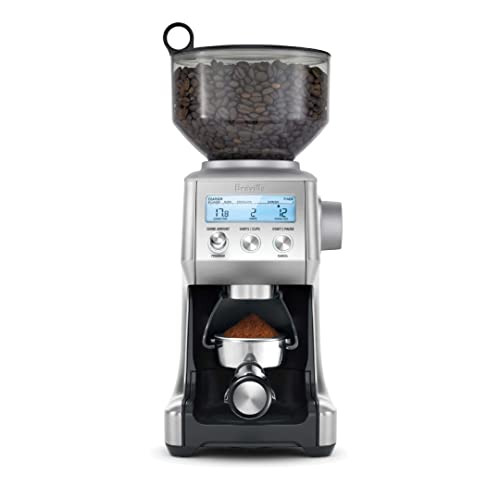
My Breville setting is close but inconsistent
Weigh the dose instead of trusting the timer alone, then adjust the grind one setting at a time. The Breville Amazon product listing lists 60 grind settings and 0.2-second dose-time increments; use the timed dose for convenience, but verify it with the scale.
Check the Encore ESP price on Amazon
Frequently asked questions
Should light roast espresso be ground finer than dark roast?
Yes, light roast espresso often starts a little finer than dark roast because it needs help giving up its sweetness. That is only a starting move: if the shot runs slow and tastes dry or harsh, go coarser. Taste, yield, and flow matter more than roast color alone.
What is the best espresso grind size for light roast?
The best espresso grind size for light roast is the setting that gives you a sweet, balanced shot at your chosen dose and yield. There is no transferable click number because burrs, baskets, and machines differ. Start slightly finer than your normal espresso setting, then move in tiny increments.
What grind size for light roast espresso on a Breville?
Use a fine espresso setting on a Breville, then adjust one setting at a time while holding dose and yield steady. Breville Smart Grinder Pro labels are only a starting map, not a recipe. The manufacturer lists 60 settings, so your useful setting depends on your beans and machine.
Why is my light roast espresso sour even when I grind fine?
A sour light-roast shot can still need more extraction from a longer yield or hotter water, not a still-finer grind. If it is slow, dry, and harsh, finer is making things worse. Keep the dose steady and change one thing so you can hear what the cup is telling you.
Should I use a longer ratio for light roast espresso?
Yes, a longer ratio is often worth trying for light roast espresso because more water can pull out sweetness that a short, tight shot misses. Paper Espresso suggests an 18 g dose and 45 g yield as a starting example. Stop based on taste, not because a ratio looks official.
How often should I change the grind setting as light-roast beans age?
Change the grind only when your measured shot and taste drift, not on a fixed calendar. Home Cafe by Charlie notes that beans can need gradual changes as they age, but there is no universal schedule. A shot log lets you spot the trend before every morning becomes a guessing game.