 Coffee Gear Picks
Is a Burr Coffee Grinder Worth It? (2026)
A burr grinder is usually worth it if you brew whole-bean coffee several times a week and want a more repeatable cup. It is especially worthwhile for espresso; it is less urgent for occasional coffee or pre-ground buyers.
Should you buy a burr grinder?
A three-step decision path before you spend the money
Step 1 Audit your routine
- Count how often you brew
- Check if you buy whole beans
- Name your usual brewer
Step 2 Match the grind range
- Espresso needs fine control
- Pour-over needs repeatable tweaks
- French press needs clean coarse settings
Step 3 Set the budget
- Decide electric or manual
- Avoid paying for features you will not use
- Leave room for fresh beans
Result
You will know whether a burr grinder belongs on your counter or can wait.
Is a burr coffee grinder worth it?
A burr coffee grinder is worth it for frequent whole-bean drinkers who want repeatable brewing, and it is close to essential for dialing in espresso. It is less urgent if you buy pre-ground coffee, brew only now and then, or will not adjust your recipe after the first cup.
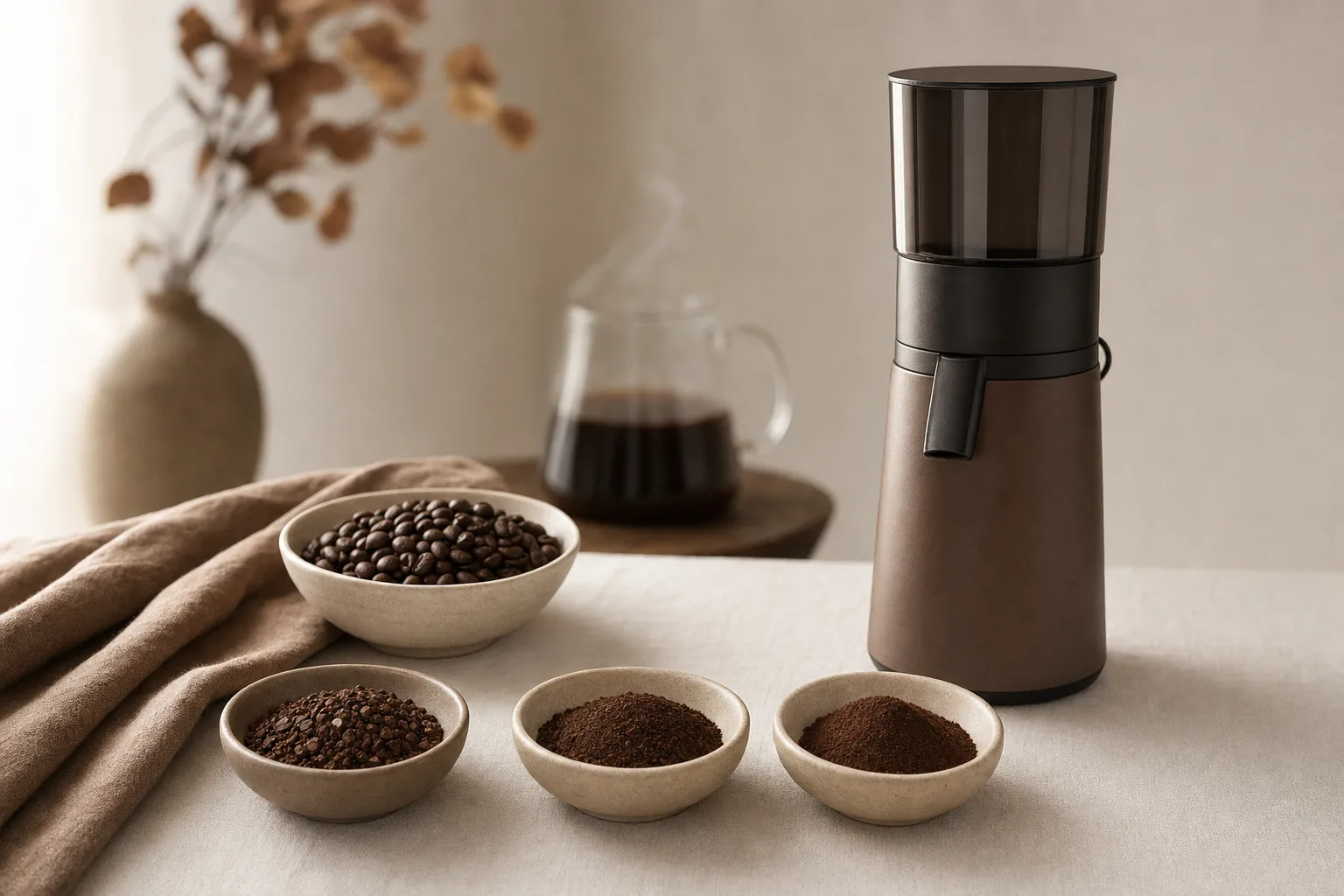
Serious Eats' burr-versus-blade explainer notes that burr grinders are easier to use for more uniform results. Breville explains the basic mechanism: burrs mill beans through an adjustable gap, while blade grinders chop them.
That does not mean a burr grinder automatically makes coffee better. It gives you a more controllable starting point. Stale beans, poor-tasting water, or inconsistent measuring can still hold the cup back.
What do you need before you decide?
You need your usual brewer, the beans you actually buy, and an honest budget. The right grinder is the one that matches your morning habit and the amount of adjustment you will realistically make.
- Whole coffee beans — if you plan to keep buying pre-ground, wait.
- Your usual brewer — espresso, drip, pour-over, and French press ask different things from a grinder.
- A realistic grinder budget — include room for fresh beans, not just shiny gear.
- Cleaning brush or grinder brush — retained grounds can affect the next brew.
Our Top Picks
How do you decide if the upgrade fits your coffee routine?
Decide by checking how often you brew, how much grind control your brewer needs, and what budget makes sense. A burr grinder is a smart upgrade when it solves a real problem rather than simply adding another appliance.
Step 1: Audit your routine
Start with frequency. If you brew whole-bean coffee most mornings, a burr grinder has a clear job: it lets you grind each dose and return to a setting that worked. If you make coffee once on Sunday and leave the bag untouched for weeks, the upgrade is harder to justify.
CoffeeRoast Co. frames this as a value trade-off for occasional drinkers, and that is the useful lens. Fresh grinding and adjustment range matter only when you will use them.
Step 2: Match the grind range to your brewer
Espresso is the clearest yes. It needs small grind changes because water is forced through a compact puck of coffee. Too fine can slow the shot dramatically; too coarse can make it run quickly. If that is your path, start with our espresso-capable burr grinder recommendations.
Pour-over and drip are a softer yes. You want medium settings you can repeat, then adjust slightly finer or coarser as a coffee and recipe require. If that sounds like your morning ritual, see our pour-over grinder picks.
French press also benefits from a repeatable coarse setting, even though it demands less precision than espresso. For big, relaxed brews, check our French press grinder picks.
Step 3: Set the budget before you shop
Pick a price ceiling before the spec sheets pull you toward features you will not use. If you want an entry-level electric burr grinder for everyday coffee, our burr grinder picks under $200 are the sensible place to start.
Spend more only when the need is real: espresso precision, build quality, or a hand grinder with finer adjustment. Otherwise, save some of the budget for beans; their freshness matters on every brew.
What mistakes make a burr grinder feel like a waste?
A burr grinder disappoints when you buy the wrong grind range, ignore retained grounds, or expect it to fix every part of brewing. The tool gives you control, but it still needs fresh beans, a consistent recipe, and basic cleaning.
- Buying a filter grinder for espresso — many basic burr grinders can grind fine, but not all offer the close adjustment useful for espresso.
- Never changing the setting — use the adjustment when a new coffee or recipe calls for it; that is the point of the upgrade.
- Letting old grounds hang around — retained coffee can affect the next brew, so learn how to clean a burr coffee grinder properly.
- Blaming the grinder for stale beans — no burr set can restore coffee that has lost its aroma.
What should you do if your coffee still tastes off?
If your coffee still tastes off after buying a burr grinder, change one variable at a time: grind size first, then dose, then brew time. That keeps the next cup useful as feedback instead of turning it into a guessing game.
Espresso runs too fast or tastes sour
Grind finer by one small step, keep the same dose, and pull another shot. If it slows down, evaluate the result before changing anything else. For a fuller walkthrough, use our guide to dial in burr grinder settings for espresso and compare it with our espresso-capable burr grinder recommendations.
Drip or pour-over tastes bitter and heavy
Try a slightly coarser setting while keeping the water amount the same. If the brew improves, record the setting before making another change; repeatability is the practical advantage you bought the grinder for.
French press tastes gritty
Use a coarser setting and pour gently so sediment stays lower in the brew. A burr grinder can help you return to a better setting, but French press will naturally have more body and sediment than paper-filter coffee.
Frequently asked questions
Is a coffee grinder worth it?
A coffee grinder is worth it if you buy whole beans and brew often enough to value fresher coffee and a repeatable recipe. Grinding just before brewing is useful, but an occasional drinker may be better served by buying smaller amounts of good pre-ground coffee.
Is a good coffee grinder worth it?
A good grinder is worth it when you want to repeat a recipe rather than guess each morning. Clearer settings and more even grinding make controlled adjustments easier. It is not magic, though: stale beans and inconsistent dosing can still undermine the result.
Is a burr grinder worth it for drip coffee?
Yes, a burr grinder can be worthwhile for drip coffee when you brew several times a week. Its main benefit is repeatability at medium settings, so you can adjust gradually when a coffee runs too sharp or too dry. Occasional drip drinkers can reasonably wait.
Is a burr grinder worth it for French press?
A burr grinder is useful for French press because a repeatable coarse setting gives you more control over the brew. It is less urgent than it is for espresso, but daily French press drinkers may appreciate being able to make small, consistent adjustments.
Do I need a burr grinder for espresso?
For espresso with fresh beans, a burr grinder with genuinely fine, closely spaced adjustment is the practical choice. Small grind changes affect how quickly a shot runs, so a blade grinder or a broad-setting grinder makes dialing in far harder.