 Coffee Gear Picks
Why Is My Espresso Bitter? Fix It in 5 Steps (2026)
If your espresso tastes bitter, dry, or burned, fix it by measuring the shot first, then changing one thing at a time. Most bitter shots come from too much extraction, but grind, yield, temperature, beans, and dirty gear can all push the cup into harsh territory.
Fix Bitter Espresso Without Guessing
A five-step diagnosis that keeps the shot measurable from cup to cup
- Weigh coffee in
- Stop espresso out
- Keep the ratio steady
- Go coarser if slow
- Move one click only
- Pull again
- Cut yield a little
- Taste the finish
- Keep dose unchanged
- Lower temp if possible
- Flush overheated water
- Watch dark roasts
- Clean basket holes
- Wipe portafilter
- Backflush if allowed
A less harsh shot, clearer decisions, and fewer sink shots while you dial in.
Quick answer
Bitter espresso usually means the water pulled too much from the coffee, especially if the finish is dry, burned, or lingering. Stale coffee oils in the group can add their own harshness, so if the machine has not been cleaned lately, work through a proper machine cleaner before touching the grinder. Seattle Coffee Gear identifies over-extraction as the main cause, while Breville distinguishes bitterness from sharp, mouth-puckering acidity.
Start with a steady recipe: same dose, same yield, same basket, same tamp. Then make one small move. If the shot is slow and harsh, grind slightly coarser. If it is still bitter at a normal flow, shorten the yield, lower heat if possible, check the beans, and clean the brew path.
What you'll need
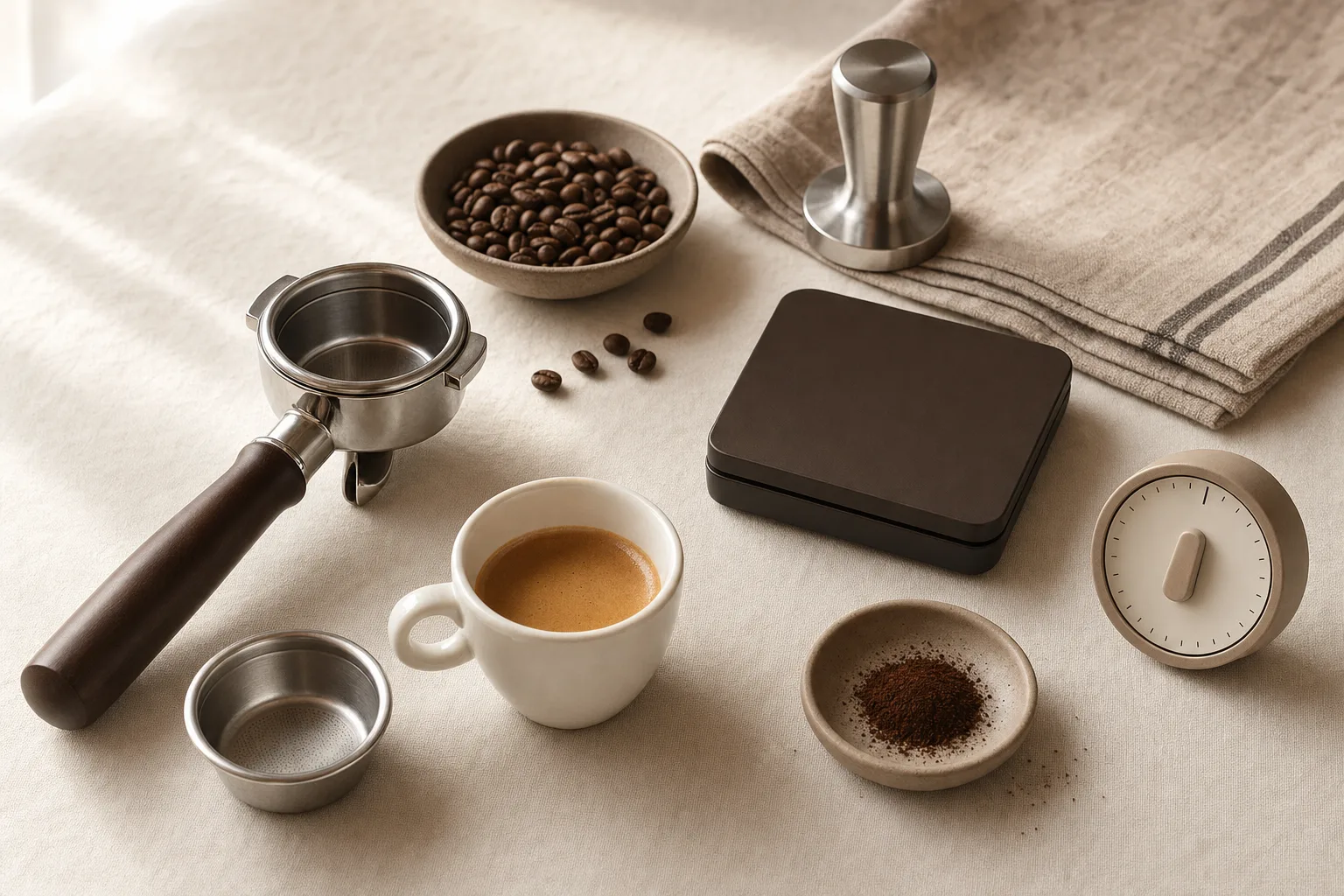
You need a few basic tools: fresh beans, a burr grinder, a scale that reads 0.1 g, a timer, and a clean portafilter basket. Roast level matters as much as any of them: dark roasts turn bitter far more readily, and machines suited to light roasts are built around the higher temperatures those beans need. These keep the shot repeatable, so each change produces useful feedback rather than a random result.
- Fresh coffee beans: old or very dark coffee can taste bitter before your machine does anything wrong.
- Burr grinder: a burr grinder gives you a better chance of controlled flow than a blade grinder.
- 0.1 g scale: weigh both the dry dose and espresso yield.
- Timer: useful for spotting slow, choking shots, though taste still decides the result.
- Clean portafilter and basket: stale oils can make a good shot taste burnt.
Fix bitter espresso in 5 steps
Fix bitter espresso by locking one recipe in place, then checking grind, yield, temperature, beans, and cleanliness in that order. Do not change everything at once. One measured adjustment gives you a clear answer from the next cup.
Step 1: Lock in dose and yield
Weigh your dry coffee, pull the shot, and stop it at the same espresso yield every time. A simple starting point is 18 g in and 36 g out, but the exact number matters less than repeating it. Without a fixed yield, bitterness is hard to diagnose because every cup is a moving target.
Step 2: Grind a little coarser if the shot is slow
If the espresso crawls out and tastes bitter, move the grinder slightly coarser. Think one click on a stepped grinder or a tiny nudge on a stepless grinder. A small coarser adjustment can speed the shot and reduce how much flavor the water pulls out; for dial-in examples, see our espresso grinder-setting guide.
Do not swing the dial wildly. That creates espresso ping-pong: one shot bitter, the next sour, and little useful information in between. If your machine gives you no temperature readout to work with, that guesswork is structural, and it is what machines with digital temperature control exist to remove.
Step 3: Shorten the yield if bitterness lingers
If the flow looks reasonable but the finish still tastes dry and hollow, stop the shot a few grams earlier. Keep the dose the same. A shorter yield can leave harsh late-shot flavors out of the cup, especially with dark, roast-forward coffees.
Step 4: Check temperature and bean style
If your machine lets you adjust brew temperature, lower it a notch for dark roasts or roast-heavy blends. If your machine overheats after sitting, run a short blank flush before brewing. If it cannot produce repeatable shots or control heat at all, our espresso machines under $200 guide shows budget options with more predictable home workflows.
Beans matter too. Breville notes that bitterness can come from extraction choices and coffee character, so do not force every roast into the same recipe. A dark roast may suit a shorter, cooler shot better than a lighter roast.
Step 5: Clean the basket, portafilter, and machine
Clean the basket holes, wipe the portafilter, and follow your machine maker's backflush or cleaning instructions. Old coffee oils cling to metal and can make a fresh shot taste dull, burnt, or dirty.
Common mistakes that keep espresso bitter
The biggest mistake is blaming one thing forever. Bitter espresso is often over-extracted, but it is not always fixed by grinding coarser. If you ignore yield, heat, beans, and cleaning, you can keep chasing the grinder while the real problem sits in the basket.
Changing grind, dose, and yield together
Change one lever per shot. If you grind coarser, keep the dose and yield steady. If you shorten yield, keep the grind steady. This may take an extra shot or two, but it makes the rest of the bag easier to dial in.
Calling burned flavor “strong”
Strong espresso should taste intense, not scratchy. If the finish dries your tongue like over-steeped tea, that is bitterness, not strength. Try a shorter yield before masking the flavor with sugar or milk.
Ignoring grinder consistency
If shots taste bitter and sour at the same time, your grinder may be making too many fine and coarse particles together. Cliff & Pebble identifies uneven particle size as a potential cause of uneven extraction. If your grinder lacks fine control, consider a burr grinder built for espresso adjustments.
Troubleshooting bitter espresso symptoms
Match the symptom before choosing the fix. A slow bitter shot, a fast sour shot, and a dirty bitter shot can all taste unpleasant, but they need different moves. Use taste, flow, and cleanup clues together rather than simply turning the grinder and hoping.
Slow drip, dark stream, dry finish
Grind a little coarser and pull the same yield again. If the next shot opens up and the dry finish fades, you were likely over-extracting. If it turns thin and sharp, you went too far.
Normal time, bitter aftertaste
Shorten the yield by a few grams. Some coffees taste pleasant early and harsh late. Cutting the shot sooner can preserve the sweeter middle and leave the rough ending behind.
Every shot tastes bitter, even after grind changes
Clean the basket, shower screen, and portafilter, then check the beans. Very dark or stale beans can bring bitterness before extraction even starts. If the coffee smells smoky, papery, or flat, the cup may reflect that character.
Bitter and sour in the same cup
Look at grind quality and puck prep. Uneven grounds or a lopsided tamp can let water race through one area and overwork another. That is how one espresso can taste sharp up front and dusty at the end.
Frequently asked questions
Is bitter espresso always over-extracted?
Not always, but over-extraction is the first place to look. If the shot is slow, dry, and harsh at the end, start with grind and yield. If it is bitter before brewing even begins, the roast or old coffee may be part of the problem.
Should I grind coarser if my espresso is bitter?
Yes, if the shot is also slow or choking. Move only one click coarser, then pull the same dose and yield again. If the bitterness softens, you found the right lever. If not, check yield, temperature, beans, and cleanliness.
Can dark roast espresso taste bitter no matter what I do?
It can. Dark roasts naturally lean toward cocoa, smoke, and roast-heavy bitterness. You can still make them smoother by shortening the yield, lowering temperature if your machine allows it, and keeping the basket clean.
How do I know if my espresso is bitter or sour?
Bitter espresso feels dry, burned, and lingering, like over-steeped black tea. Sour espresso feels sharp, thin, and puckering, more like lemon peel. Breville makes the same sensory split in its bitter coffee guide, and it is a useful first diagnosis.